Aaron Everlasting

(This story is from Yankees Magazine Online)

This one came out of nowhere. I was planning on traveling to Las Vegas for a conference, and because I was going two-thirds of the way across the country, and because a co-worker had a sudden conflict arise, my editor suggested that I follow up the Vegas trip by checking out an Aaron Judge All Rise Foundation event in Fresno, California. Obviously, I wasn’t about to say no to that.

Since I was heading out there with a few days to spare, I somehow convinced Aaron’s people to let me go to the fundraising dinner they were holding, then spent some time at Fresno State’s football game two nights later, where they honored Judge on the field. In between, I used some downtime to check out Yosemite National Park.

The story that I eventually wrote came out a lot of confusion I was feeling throughout my time in Fresno. The events were … small? I don’t mean that in a negative way, and I think it’s probably a function of my New York–area mentality that I even bumped against it. But the fundraiser didn’t have any media, didn’t have any celebrities. It certainly could have. If Judge had allowed the media inside (or even outside), plenty of reporters would have jumped at the chance. I was there almost by accident.

In spending time around the family, and with Aaron’s agent, what became very clear was that this was by design. It’s not that they don’t have big goals for the foundation, it’s just that they want to honor those who have been with them from the start. What they seem to be saying is that there will come time for the massive events. For now, though, better to reward those who have been loyal. It was blindingly obvious as I watched Aaron chatting with his former college teammates that it just doesn’t cross his mind that there might be some distance between them, some difference in where the world has taken them. That’s remarkable, and it’s a skill!

Aaron’s family is insistent on loyalty, almost fanatically so. And as you talk to his parents, Patty and Wayne, and watch them interact with people, you can see how Aaron became the way he is, the standup superstar in New York, the humble megastar.

I really tried to show that side of him, and the way he got where he is. Largely, what I saw was that he is who he has always been, in a good way. I hope you’ll read and enjoy.

https://www.mlb.com/yankees/news/aaron-judge-is-always-consistent?t=yankees-magazine

Carry That Weight

(This story originally appeared in the August 2019 edition of Yankees Magazine.)

I wasn’t born when Thurman Munson died, and for most of my life, I kind of viewed him through a lens of a cynical outsider. It was easy to kind of dismiss him as a guy beloved on account of a tragic ending.

I had never really forced myself to look at how impressive he was on the field, what he meant to fans in life, not just in death, the way he operated in the clubhouse and on the field. For any cynicism I have had about Derek Jeter’s role as a Yankees captain, I think I was similarly blind, prone to undervaluing Thurman Munson.

So it was great to spend as much time as I did this summer researching him, leading up to an afternoon in Canton, Ohio, that I’ll never forget, when I spent time with his widow, Diana, and his son, Michael.

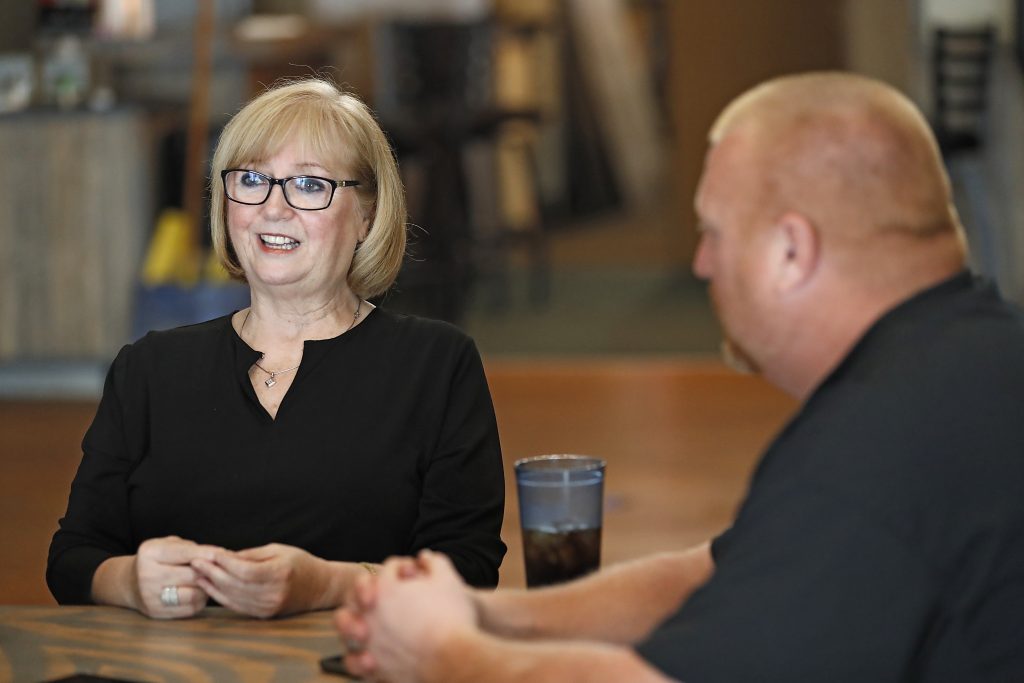
We met at Michael’s bar, then spent hours chatting. I learned more than I could have imagined. Diana was open about Thurman’s less-awesome qualities, candid about the ways that he could be a bully. I saw her pugnaciousness, the ways that she would push back against him.

But what I saw the most was the way that she carries on as Thurman’s legacy, a real living monument. She ripped open scars and told me about the worst moments of her life, but also spoke at length about her work to keep her late husband’s memory at the forefront. She continues raising money for the AHRC, continues showing up at Yankee Stadium on Old-Timers’ Day, so that the fans can cheer her for her husband.

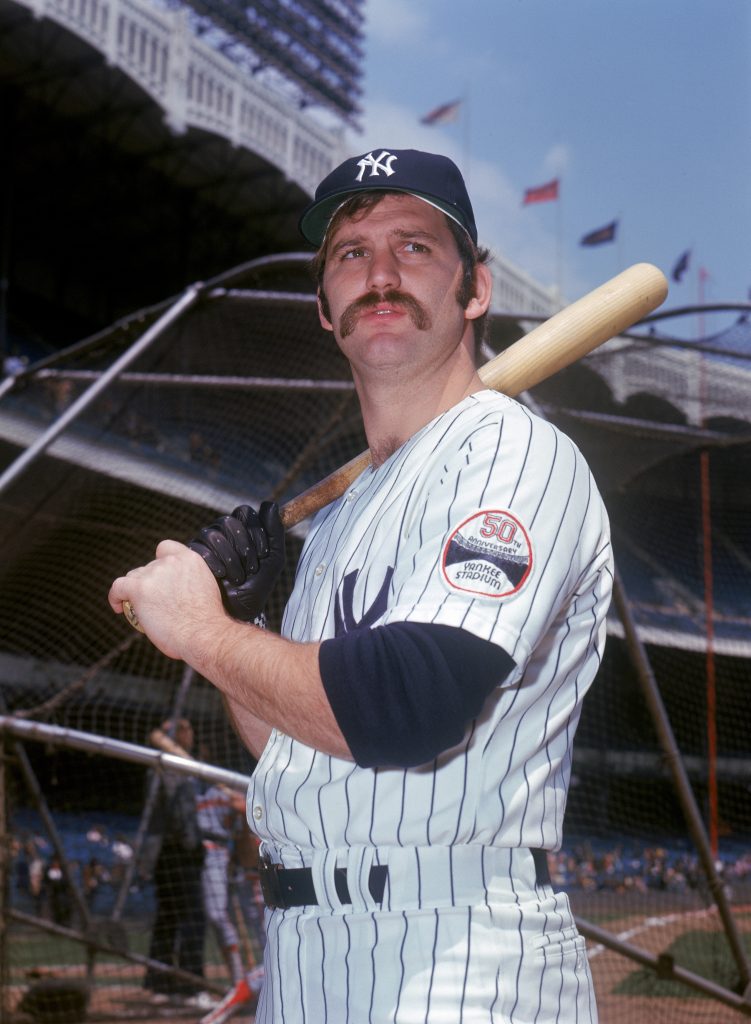
NEW YORK – UNDATED: Thurman Munson #15 of the New York Yankees poses for a portrait circa 1969-79 at Yankee Stadium in the Bronx, New York. (Photo by Louis Requena/MLB Photos via Getty Images)

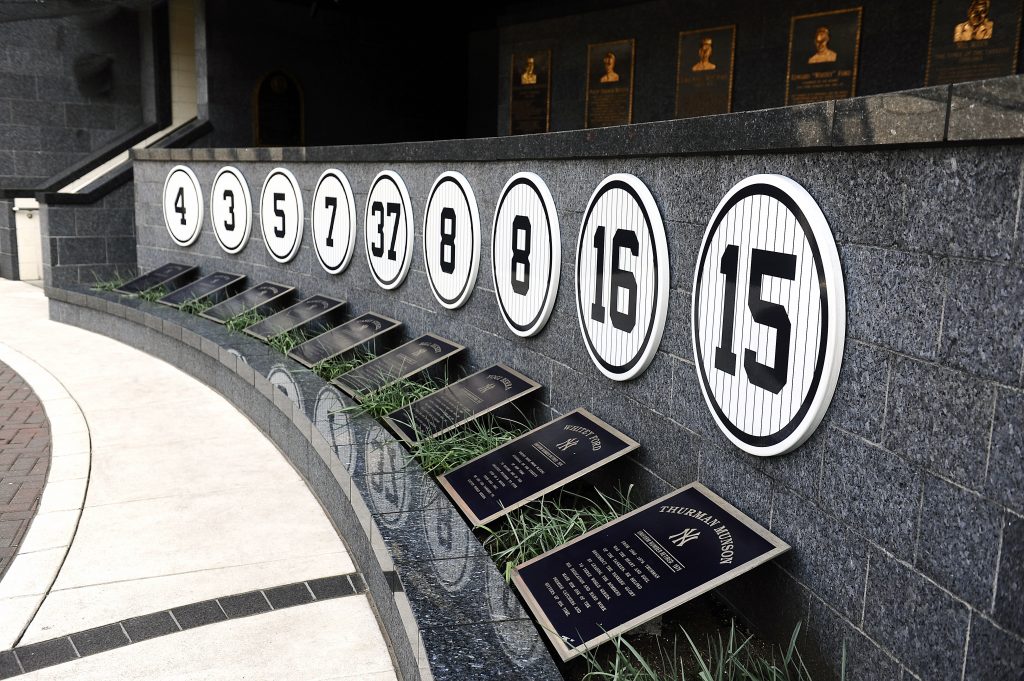
During my time in Canton, and certainly around Yankee Stadium, I tried to find as many monuments to the late captain as I could. Along with a photographer, Barrie Schneiderman, I drove around town, to the stadium that bears his name, the street named for him, the large and impressive gravestone. We drove past the airport and the field where his life came to an end. In New York, we saw his locker, his number 15 on the backs of fans way too young to have cheered for him.

I tried to tell a big story here. The way that Diana has kept her husband alive in the 40 years since he died. It was a special story to tell, not the least because of how much I learned in the process.

https://www.mlb.com/news/remembering-yankees-captain-thurman-munson

Tyler and the Miracles

(This story originally appeared in the April 2019 edition of Yankees Magazine.)

This one really fell into my lap, and I can’t say enough about how grateful I am for that. A colleague on the Tampa side of the Yankees’ operation emailed a co-worker to mention this interesting story about a Yankees draft pick who was allowed to keep his long hair, which goes against the team’s well-known (and oft-mocked) grooming policy. She mentioned that it might be cool as short item for the front of book section.

Basically, the story was that the player, Tyler Johnson, was growing out his hair to make a wig for his mother, who had been diagnosed with leukemia. My coworker had recently taken another job, so she passed the email on to me, and I was intrigued right away.

I had no idea how amazing the story would become, though.

It turns out, Tyler had his own dramatic and traumatic medical history, one that shaped his mentality and his whole life. So he was determined to pitch professionally, and his mother was determined to watch him pitch professionally, and it was all a crazy pipe dream, until it wasn’t. But on that fateful day when the Yankees drafted him and told him to cut his hair, he explained the situation. Eventually, the question made it all the way to the team’s owner Hal Steinbrenner, who insisted that Johnson not cut his hair until he could get it long enough to make the wig.

This was a heart-wrenching story to write. Tyler’s mom, Bethanne, walked me through years of nightmares, of horror I could never imagine. Tyler told me stories I simply couldn’t conceive of. I would hang up and wipe tears from my eyes. Instead of a small item on a quirky, out-of-place hairdo, it became one of the most meaningful stories I’ve ever had the privilege to write.

I hope you’ll read and enjoy.

https://www.mlb.com/news/yankees-prospect-johnson-defies-the-odds

Rise Up

(This story originally appeared in the August 2017 edition of Yankees Magazine.)

Right when the season started, I penciled in this trip to Miami. I had a feeling that Aaron Judge was made for an event such as the Home Run Derby, and I had to see it first-hand.

Remember, at the time, Judge was coming off a big-league debut that saw him hit just four homers in 84 at-bats, but the guy is so big and so powerful that it was obvious he was going to hit. I definitely don’t consider myself some sort of genius for figuring that it might be worth checking out.

That said, it obviously paid off. I’ve been to the Home Run Derby seven times now, and it’s hard to express just how much MLB improved the event with the new rules that were introduced a few years ago (this was my first time seeing the new format in person). The four-minute rounds are dramatic. They’re fun. They are — when you’re in town to write a story about a guy who is in danger of not advancing out of the first round — kind of agonizing.

My story is about Judge’s incredible performance, but it also tries to make sense of this larger-than-life character who seems to prefer to blend into the background wherever possible. I tried to figure out how he feels about all the attention and intrigue of the first half, and how his life has colored his perspective. Judge is a great guy, extremely friendly and kind, but it’s nearly impossible to get him to talk about himself. So I tried to piece the puzzle together myself. How does he do it? He’s not saying.

In between, I tried to get in some fun anecdotes from the weekend, such as the balls off the roof, the opposite-field shots, and the general excitement in Marlins Park. Hope you enjoy.

The Official News of New York Yankees

Source: Aaron Judge dazzled in All-Star Game, Derby | MLB.com

A Change is Gonna Come

(This story originally appeared in the June 2017 edition of Yankees Magazine.)

Spring Training is often a time when I go around fishing for stories. The clubhouses are filled with players, and there are fewer amenities off-limits to media, which means that the players are generally more accessible. And they’re usually in a good mood, so you can be a bit more playful in terms of what you’re looking for. Where I’ll head to a clubhouse during the regular season with a definite idea for what I need and who I want to speak to, I’ll often just seek to chat with anyone I see during spring training. You never know what can come up.

So this year, with Commissioner Rob Manfred showing a willingness to evaluate the game’s practices (see: the odd new intentional walk, which I’m still not used to), I felt like it would be cool to talk to basically every player on the team about the same subject: What would they change if they could do anything?

A couple of interesting things happened: One, the morning after my first day of question the guys on the team on the topic, The New York Times ran a big package on the same idea — what would baseball writers change? So that bummed me out a bit. But the more players I asked, the more interested I got in how different the answers were. Some guys were totally selfish and playful — make the strike zone bigger, a few pitchers said; let me get a strikeout with one strike. Other players were totally into the idea of developing the ideas beyond the superficial. For instance, Brett Gardner and I got into a back-and-forth about his idea of limited pickoff attempts. How could you do that practically in a way that wouldn’t just eventually give a runner a free base? It was an interesting chat.

There was one topic I wanted to pursue further that I wasn’t able to. I noticed, anecdotally, that almost all of the Latino players I spoke with weren’t at all willing to criticize the game. Not in any way. Their quotes were all “I’m so lucky, this game is so great.” I tried to push further — was it too simplistic to attribute that feeling to their culture? Was there some other connection that I was missing? In the end, I dropped it. No one wanted to help me get into their own psyches on the matter, and I didn’t want to go psychoanalyzing them. I wish I would have been able to.

Either way, there’s some stuff in here I really like. I think that the Chase Headley stuff was really intriguing — he is a great guy to talk to, in that he’s completely willing to break down his swing and his thinking on everything. And he was very frank on both sides of the argument he was making, even as I pointed out that he was contradicting himself. I think he didn’t care, and I kind of think that made it feel authentic.

Anyhow, I hope you’ll read and enjoy.


Workingman’s Blues

(This story originally appeared in the Spring 2017 edition of Yankees Magazine)

When I visited Arizona in January of 2017, my plan was to come back with two stories. One on Tim Raines, who was up for election to the Hall of Fame, and I was pretty confident that he would get it. The other would be spending some time at Jacoby Ellsbury’s camp for Navajo youth (more on that in an upcoming post), then visiting the reservation in western Arizona where his family has deep roots.

The day we landed, though, Ellsbury’s agent called with a surprise offer. After telling us that our time with Jacoby would be extremely limited, the center fielder agreed to let us come out to watch him work out the next day at his offseason training facility.

EXOS, where Ellsbury and a host of professional athletes work, is an absolute factory of fitness and nutrition. Every single thing that happens there is carefully crafted to be perfect for each individual player. It’s really a sight to see. While we were there, there were a bunch of players from other sports, including players preparing for the NFL Combine. But Ellsbury’s group also had a handful of notable MLB players, such as Evan Longoria, Miguel Montero and others.

Because I was already writing an Ellsbury story, I wanted to make sure that I got some other players involved, so I decided to check out the spectrum of how different players — with different salaries and therefore different spending abilities — handle their offseasons. We met up with Rob Refsnyder for a workout of his (conveniently, he’s also in Arizona), then met with Chase Headley in New York later that month. I think the story does a good job of showing how different each player is, but how hard they all work. There really is no offseason anymore. That was definitely clear through the whole process of reporting this one.

I hope you’ll enjoy.

http://m.yankees.mlb.com/news/article/216825336/no-offseason-for-yankees-pre-spring-training/?topicid=163658034