Going Places

I first met Billy Bean during the summer of 2014, when I was writing a piece about his visit (along with Brian Cashman and Jean Afterman) to a high school for largely LGBT youths, many of whom had been kicked out of their houses. I knew right that I wanted to spend more time with this guy.

Bean’s story is, alone, extremely compelling. He was a good major leaguer, never great, but he was driven to near madness by the secret he was forced to keep. He was a gay man in the straightest of worlds. When tragedy struck, it was too much to handle; the stresses, the rollercoaster between the majors and the minors, the hiding — they all became too much to handle. He just quit.

And then, he found himself. He got to live openly. He got to be a person. He was happy. Eventually, more than a decade later, MLB reached out, interested in having him be their face to the LGBT community. He accepted, and since then, he’s been traveling the country to spread MLB’s message of inclusion.

This spring, I spent about three days with him. We had a long talk over dinner, I followed him to the Yankees’ spring training facility, where he met with the organization’s minor leaguers, and we visited with Dr. Richard Lapchick from the University of Central Florida, where Billy addressed a group of graduate students. I was totally overwhelmed by how impressive Billy is, how captivating his message can be, and how people respond to him.

But I also was really taken by the emotional heft of his story. I did my best to get that across in here, but I wonder if I did it well enough. Billy’s a strong dude, and it’s very clear that there’s nothing he’s afraid of. But there was a real heaviness to his tone when we were talking about the sadder, more difficult parts of his life. He has probably told this story hundreds of times, and he wrote about it in his book, “Going The Other Way,” but he was still near tears as he told me about Sam, about his own personal demons, about his refusal to let his teammates — his friends! — know who he really was.

I can’t even begin to guess what his future holds, but I’m certain that the work he’s doing is going to have amazing and important results for so many people.

http://m.yankees.mlb.com/news/article/175816378/billy-bean-brings-mlb-message-of-inclusion?topicid=163658034

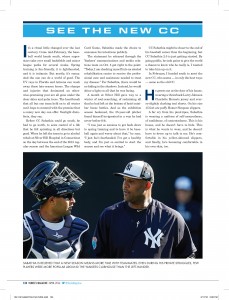
See The New CC

This was a particularly gratifying story to write. As I mentioned in my last post, I love working with CC Sabathia — he’s an interesting guy, really open about his process, really intelligent on and off the mound. I was working with his family’s foundation on the marathon story when the news broke that he was entering rehab. I immediately wondered if the relationship I had built with his team of advisers would make me the right person to help tell his story.

I reached out to CC’s people, and they were happy to work together. I flew down to Tampa and met CC at his house, where we went to a back room and talked for about 40 minutes. In preparation, I had spoken with a bunch of people, including some in the field of mental health — nothing on the record yet, I just wanted to know the best ways to handle the conversation. I obviously had a job to do, and I wanted to get the most out of my time with CC, but I wanted to know the questions I should ask, the topics I should avoid, and other strategies to get someone to talk about something this personal.

I was happy with how everything came out. CC was really open to talking, and he did a good job of sticking to areas where he was comfortable, doing his best to move me away from some places he didn’t want to go. But he didn’t refuse to answer a single question, and he didn’t seem resentful (or angry) when I pushed him.

In planning for the story, I had initially wavered between writing in the third person, or having it be first person in CC’s voice. But in the end, I decided to do it first person in my own voice. I thought the story was most interestingly told through my eyes, not as a reporter, but as a person in the room with him. I thought that, counterintuitively, having my own voice in there describing the situation would actually make it LESS judgmental than approaching the issue as an omniscient narrator. And I also thought it humanized the entirety of the situation.


NYY_April16_pg122 NYY_April16_pg123 NYY_April16_pg124 NYY_April16_pg126 NYY_April16_pg128 NYY_April16_pg130 NYY_April16_pg132

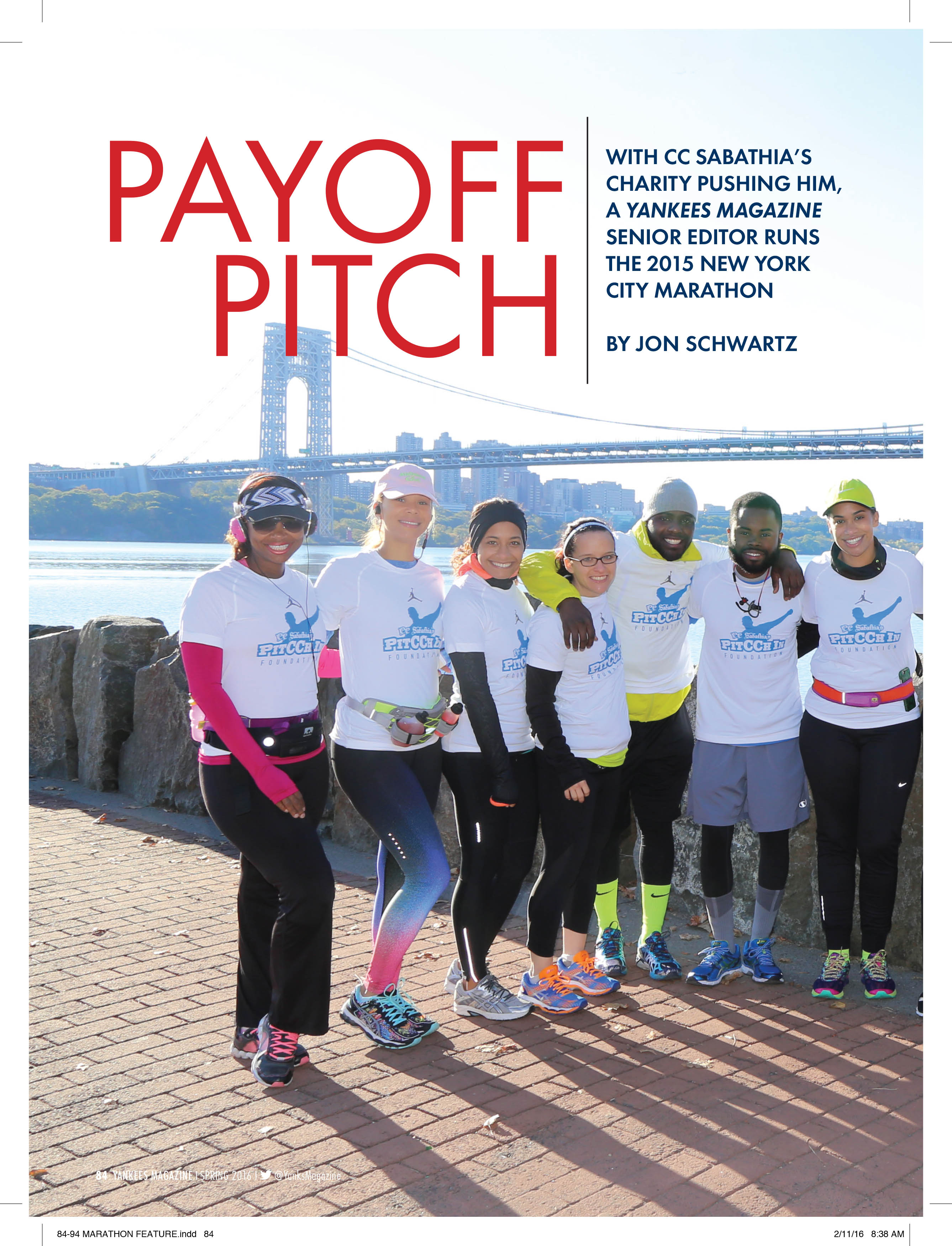
Payoff Pitch

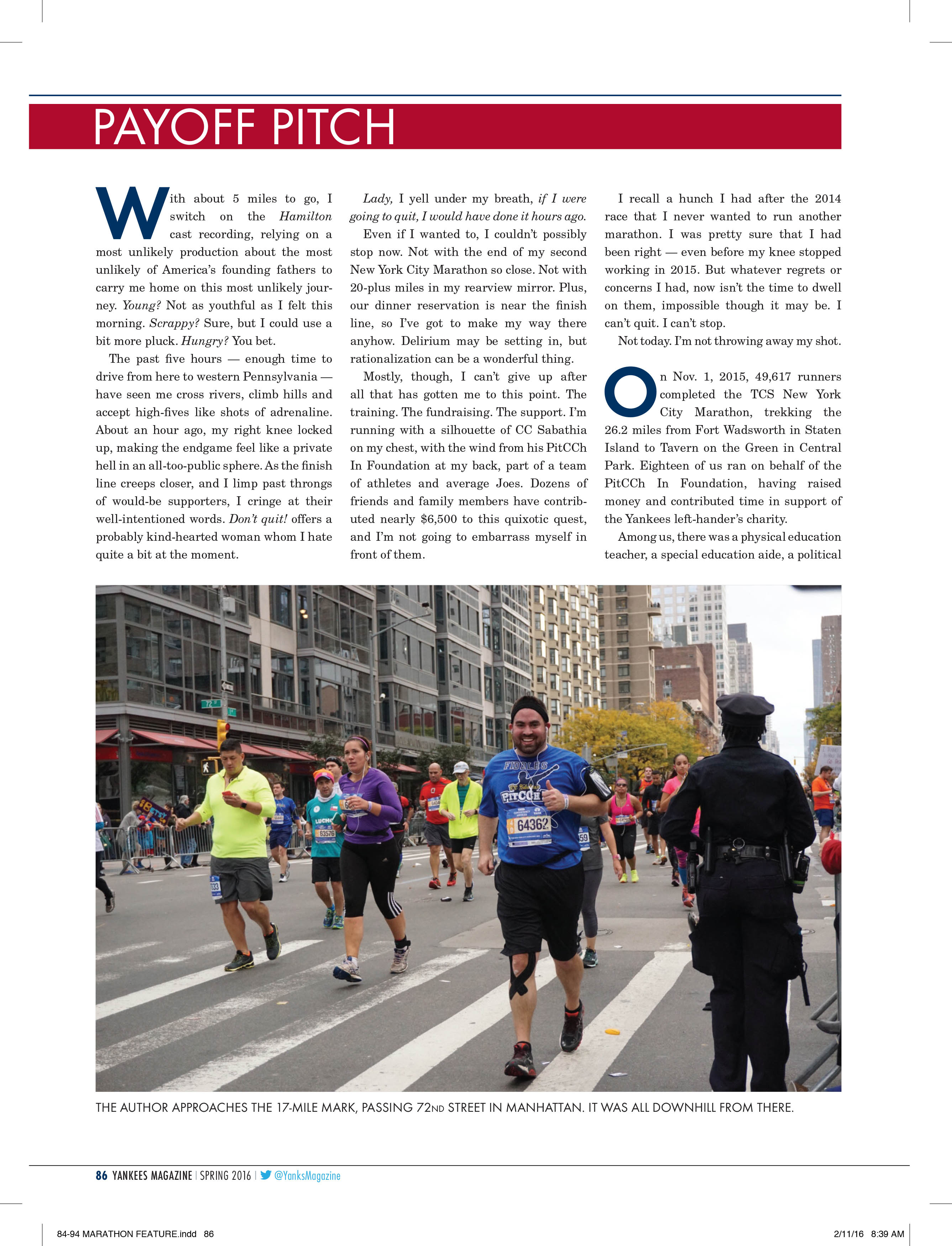
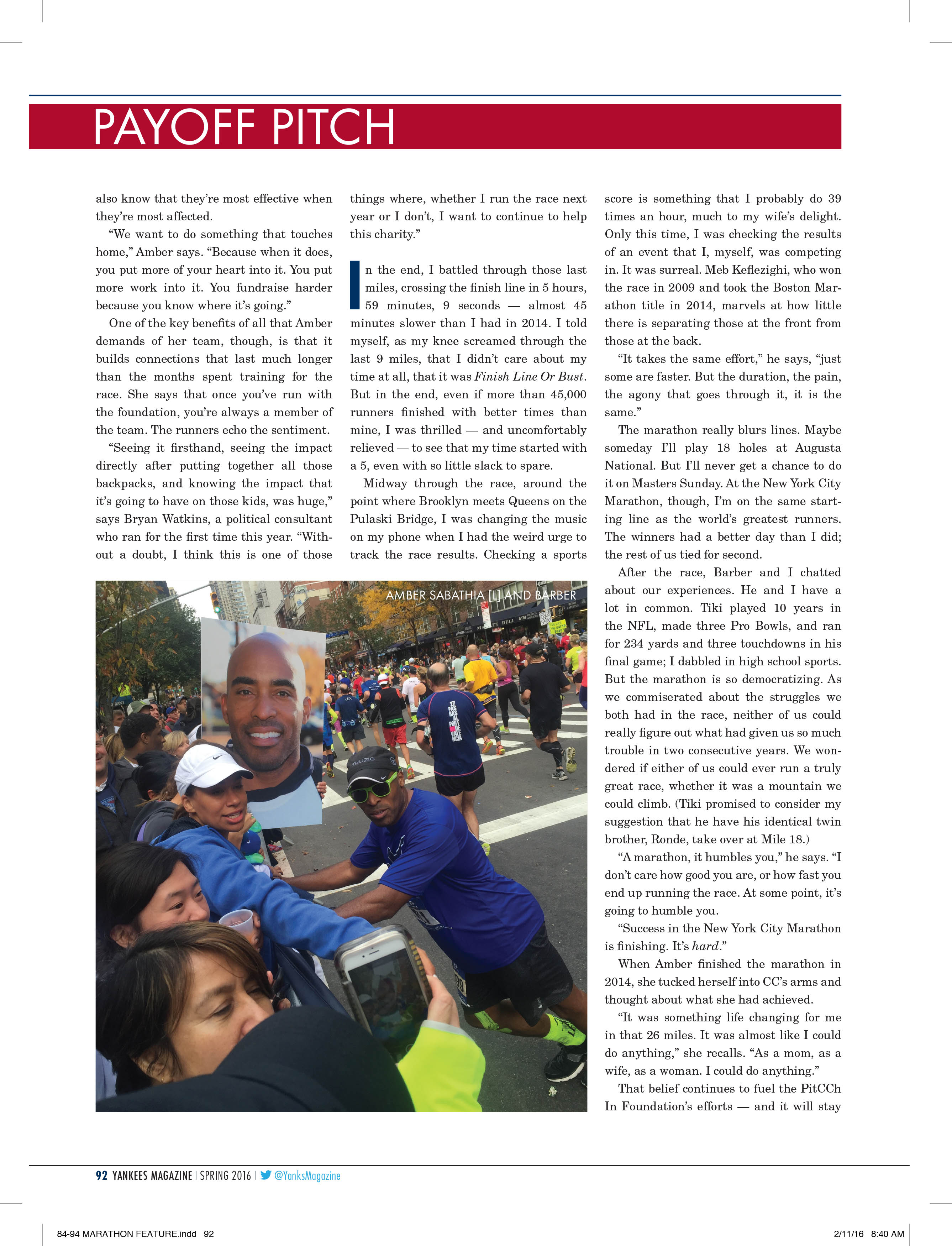
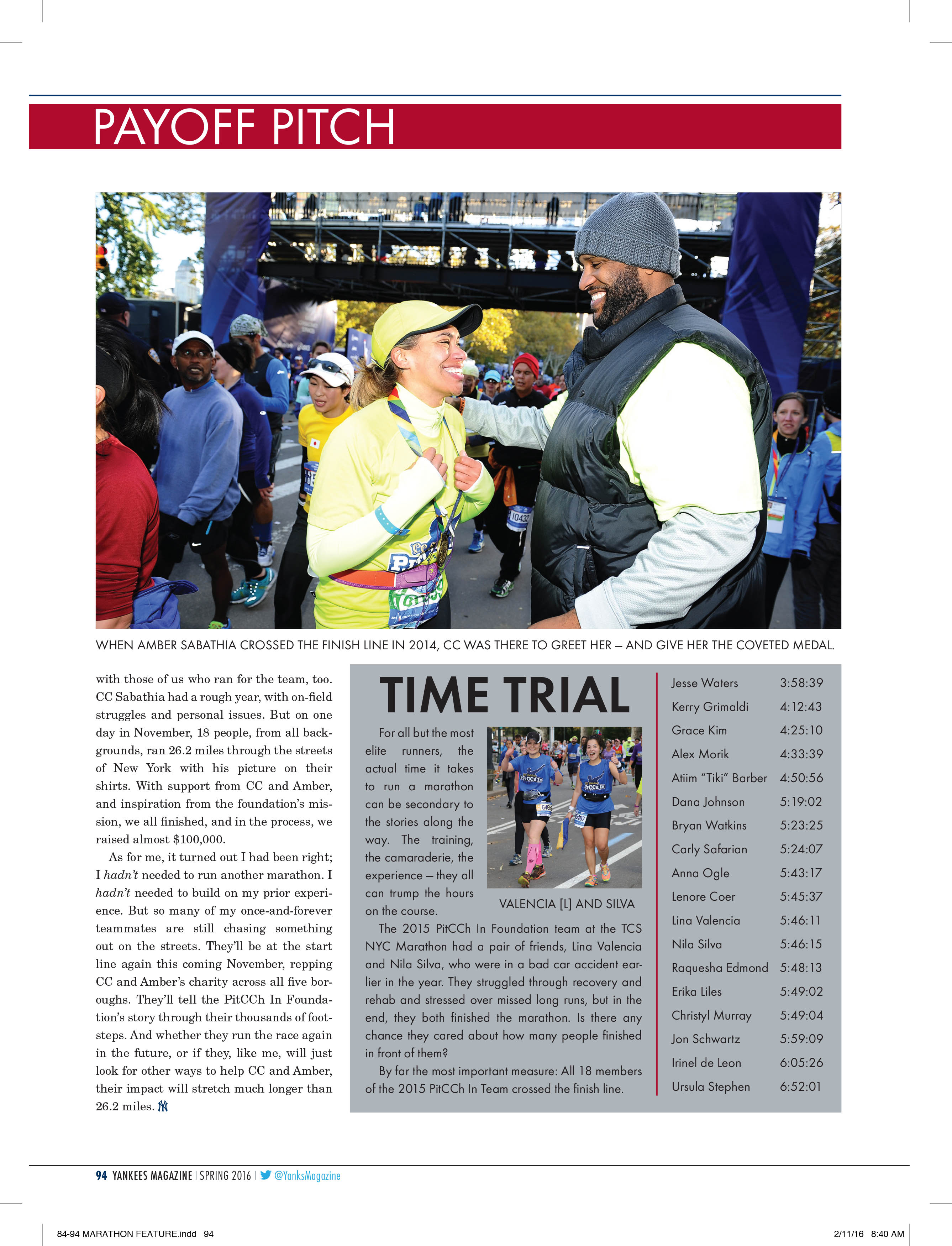
Pretty sure nothing will ever compete with this story for the title of hardest I’ve ever worked on a piece. In 2015, I joined CC Sabathia’s PitCCh In Foundation NYC Marathon team, fundraising for the charity and running the 26.2 miles with CC’s image on my shirt.

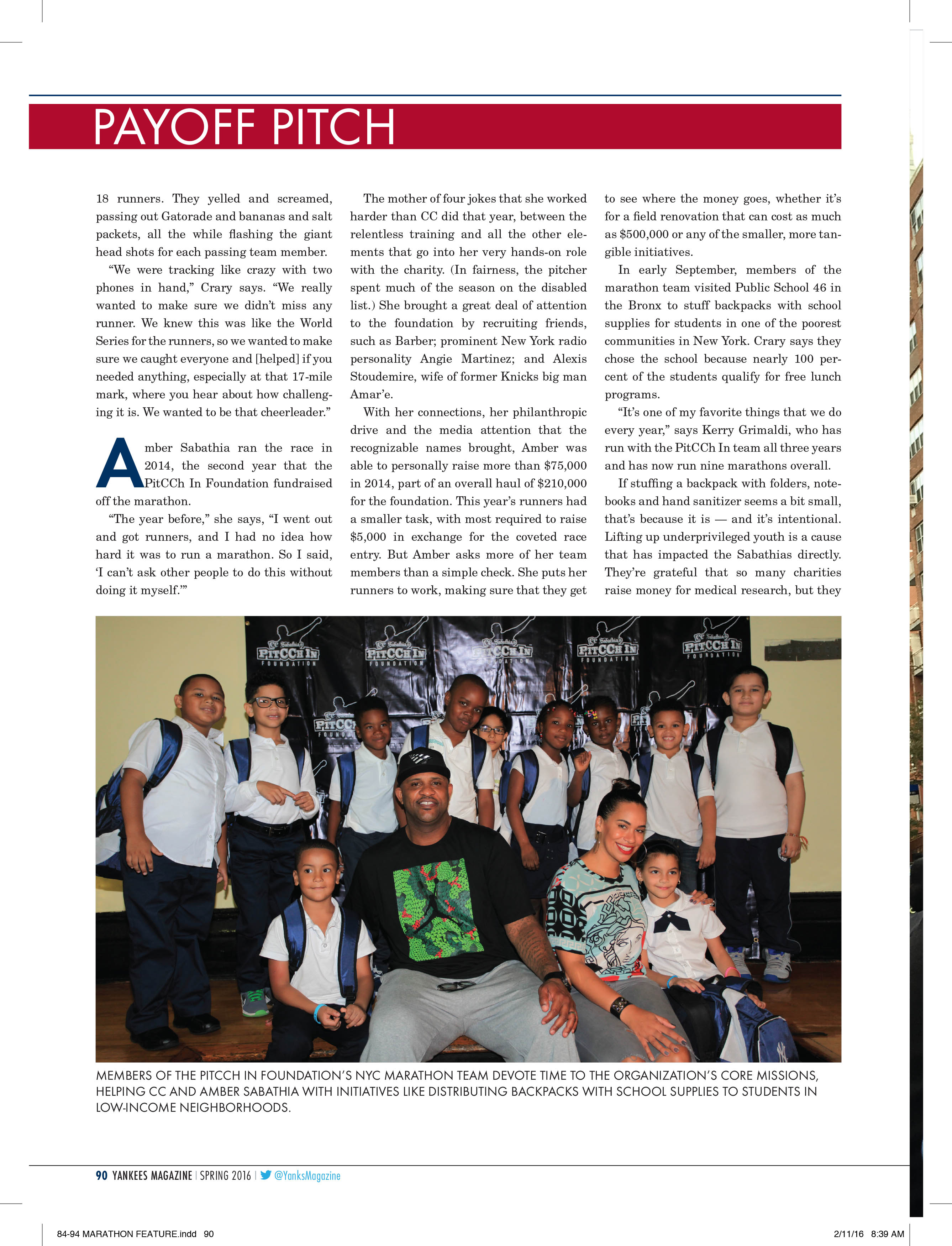
I can certainly say that I’ve never inserted myself so much into my story. I’ve written plenty in the first person, but never have I gone to lengths like I did in reporting on how the charity works, how it builds its team, where the money goes, and what it means to the runners, the family members, and to the people the foundation helps.

I hated running this year, and I can safely say that my second marathon will be my last. But this is probably the most fulfilling reporting assignment of my life. It was really incredible to work so closely with CC’s family on this project, and to get to see it from so many sides.

Also, I really loved the work I got to do with Tiki Barber in my reporting. He was totally open about his whole experience, and in the three conversations that we had, I really was able to find so many things that we share in common, despite his being a Pro Bowl running back, and me being … decidedly not. When I interviewed Meb Keflezighi, he told me that despite his place at the front of the pack, and mine damn near close to the back, “It takes the same effort, just some are faster. But the duration, the pain, the agony that goes through it, it is the same.” I really took that message to heart.

Bit by Bit, Putting it Together

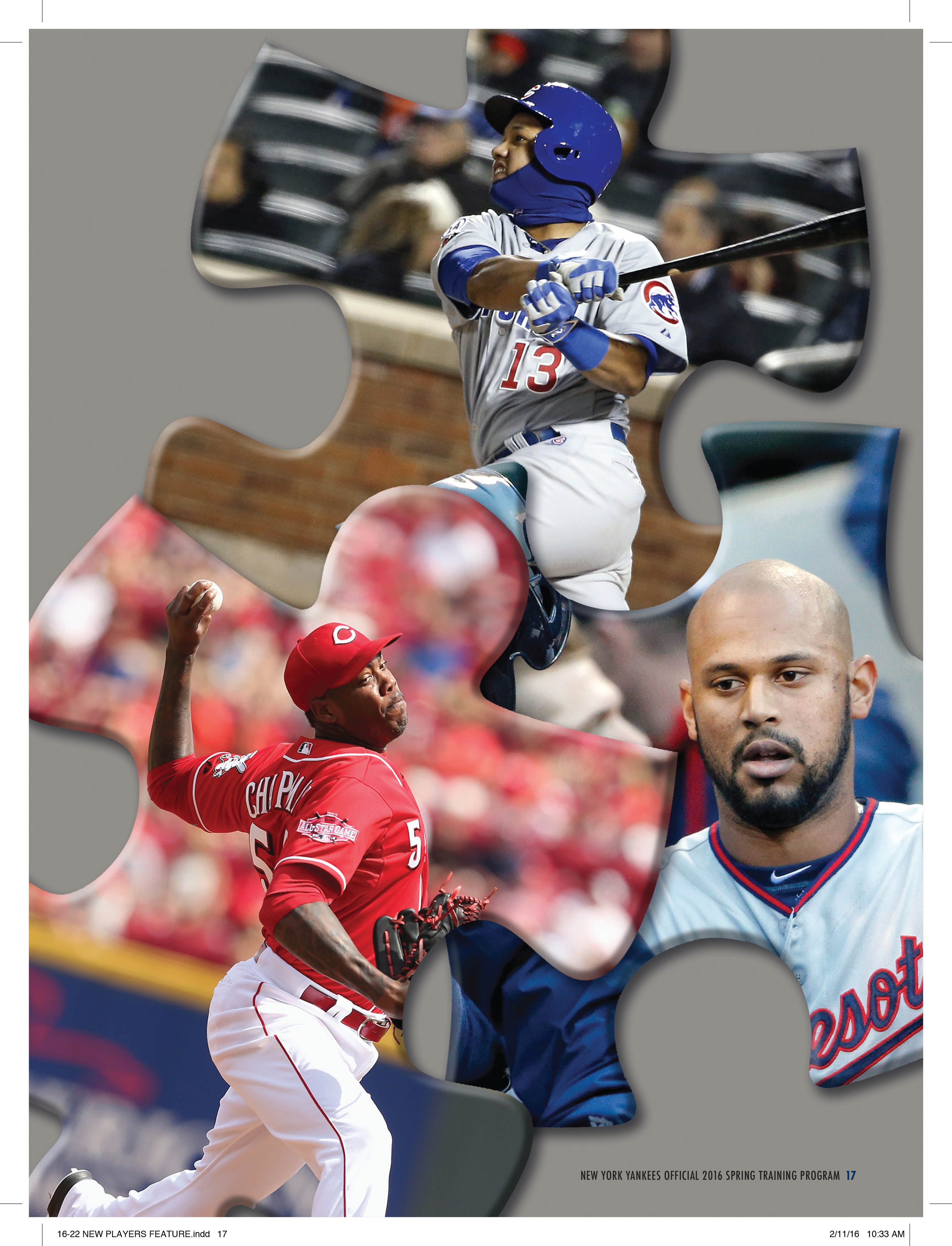
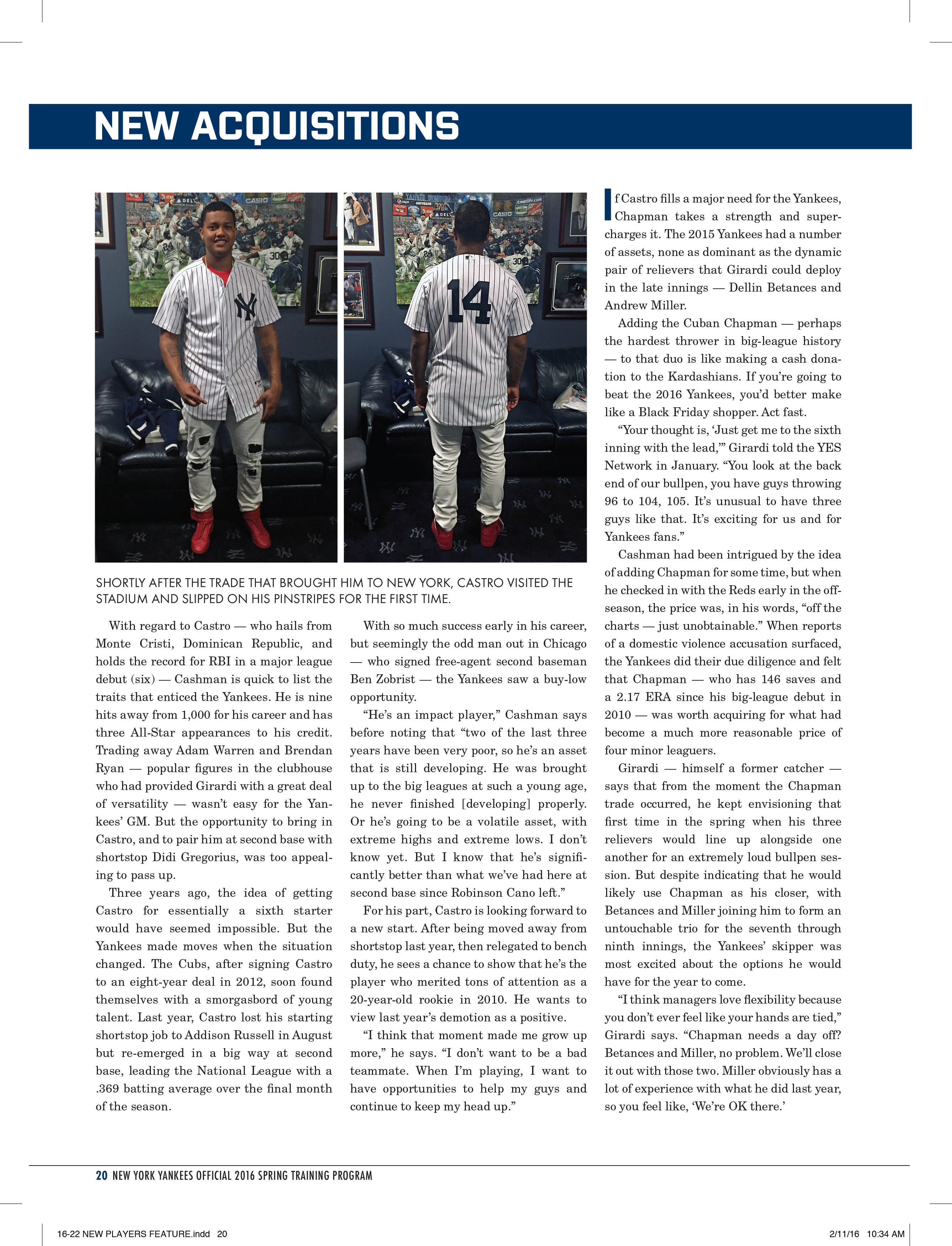
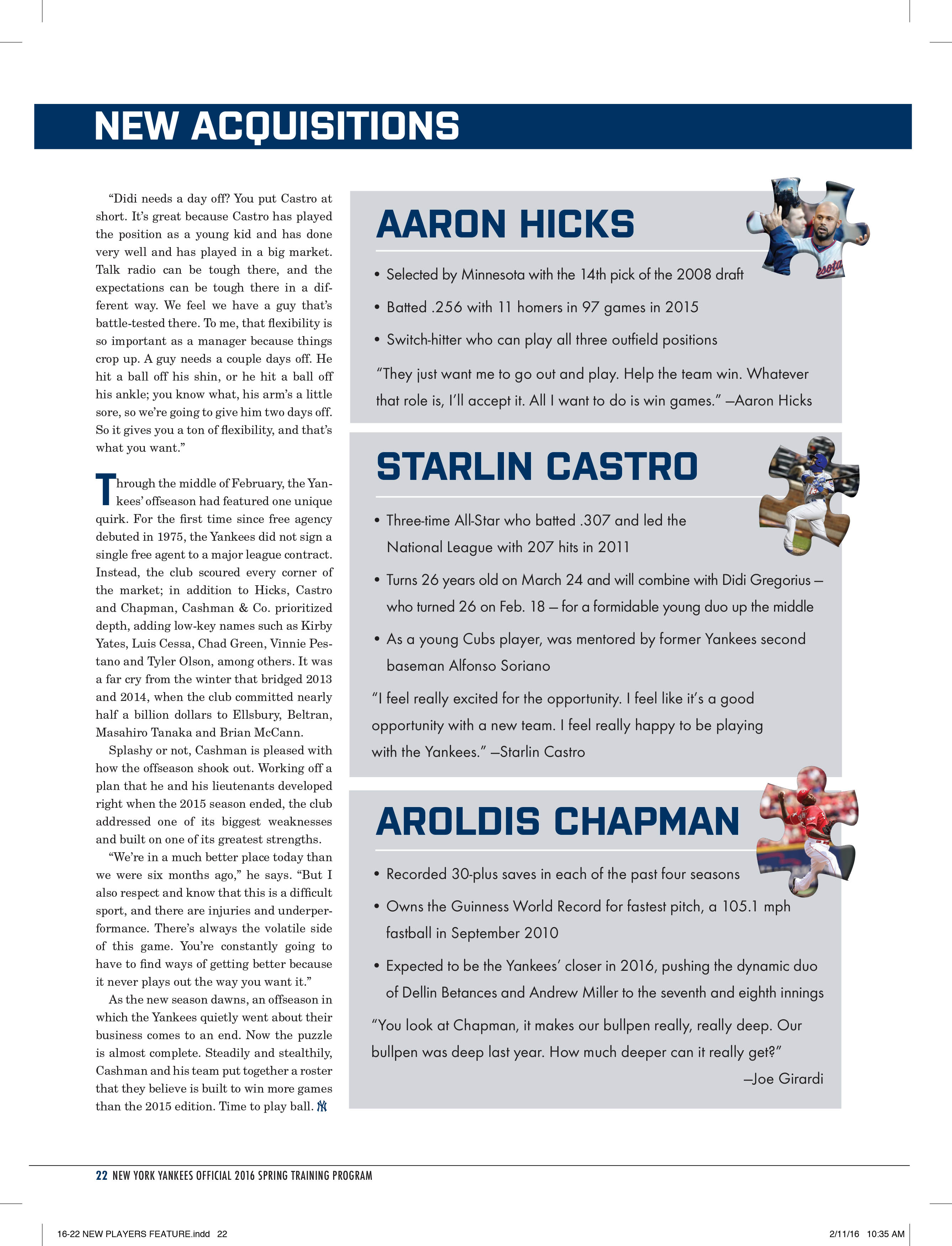
For the 2016 Yankees Yearbook (and the Spring Training issue of our magazine), I was assigned to write about the Yankees’ offseason acquisitions. About a decade ago — even less, really, when you consider some recent offseasons like 2008-09 and 2013-14 — it would have seemed crazy to think of how uneventful the past few months were in the Yankees front office. For the first time since free agency began, the club didn’t sign a single player to a major league offer.

As such, putting the story together was a bit more challenging than I would have originally thought. How much was there to say about adding a fourth outfielder in Aaron Hicks, a castoff middle infielder in Starlin Castro, and a closer facing discipline for domestic abuse in Aroldis Chapman.

Obviously, there’s no way to write about the Yankees’ offseason in a way that makes it seem like the club signed David Price and Jason Heyward. But in talking to people around the office, I got to understand some of the philosophical foundation on which the offseason was built. I think the story that resulted was a compelling look at a quiet — but possibly quite impactful — few months.

Every Little Thing

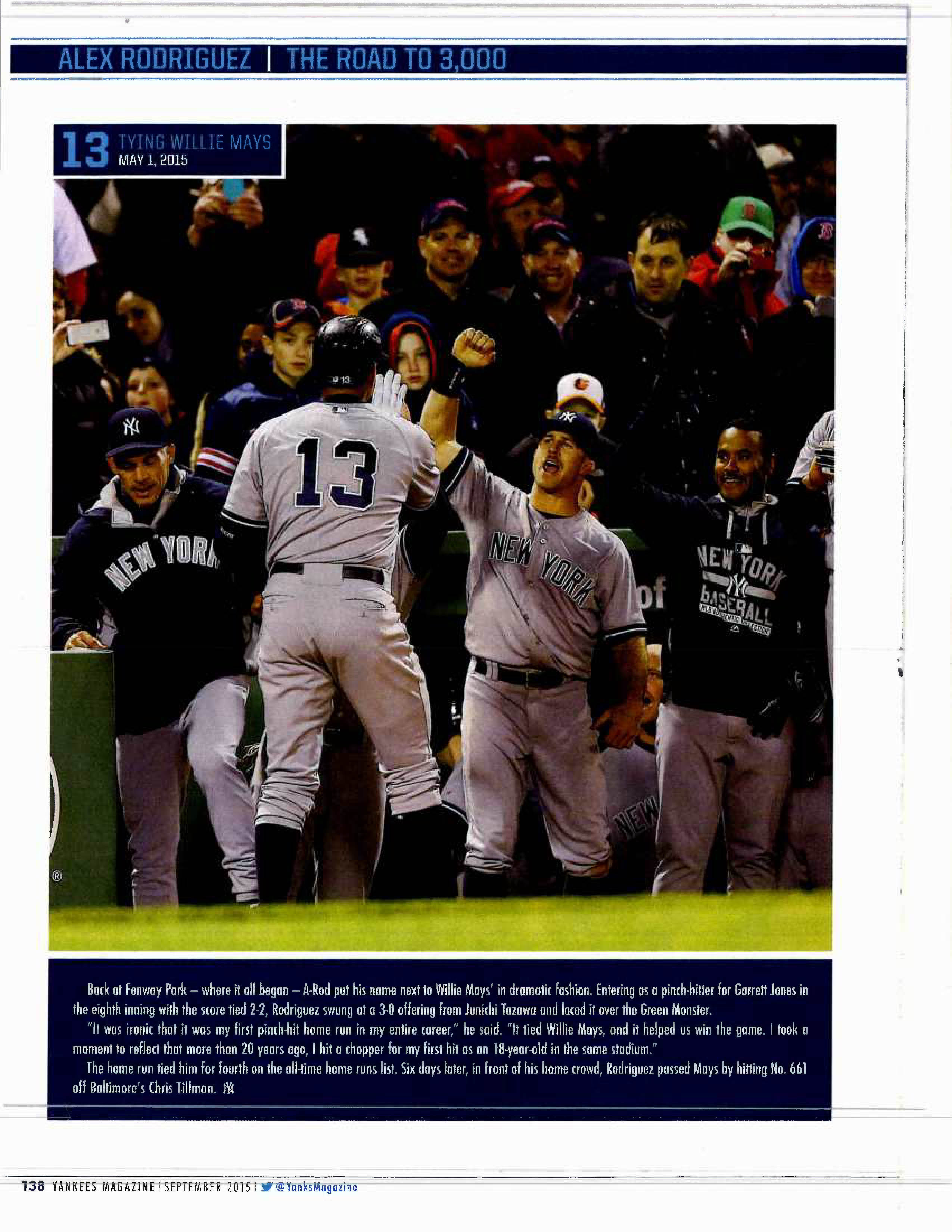
This is a story that I wrote for a Yankees Magazine package on Alex Rodriguez’s 3,000th hit. I was tasked with putting together a list of A-Rod’s most memorable career hits, and was able to get the Yankees’ slugger to weigh in them, offering insight into what made them special and particularly noteworthy.

In deciding how to put it together, I was torn between a simple write-thru, and a set out list. In the end, I settled on the latter, shifting between items that were simple quotes of A-Rod’s and others that I wrote out a short narrative. It’s a very simple story, but I was pleased with how it came out, both in terms of the content and its visual appeal.