
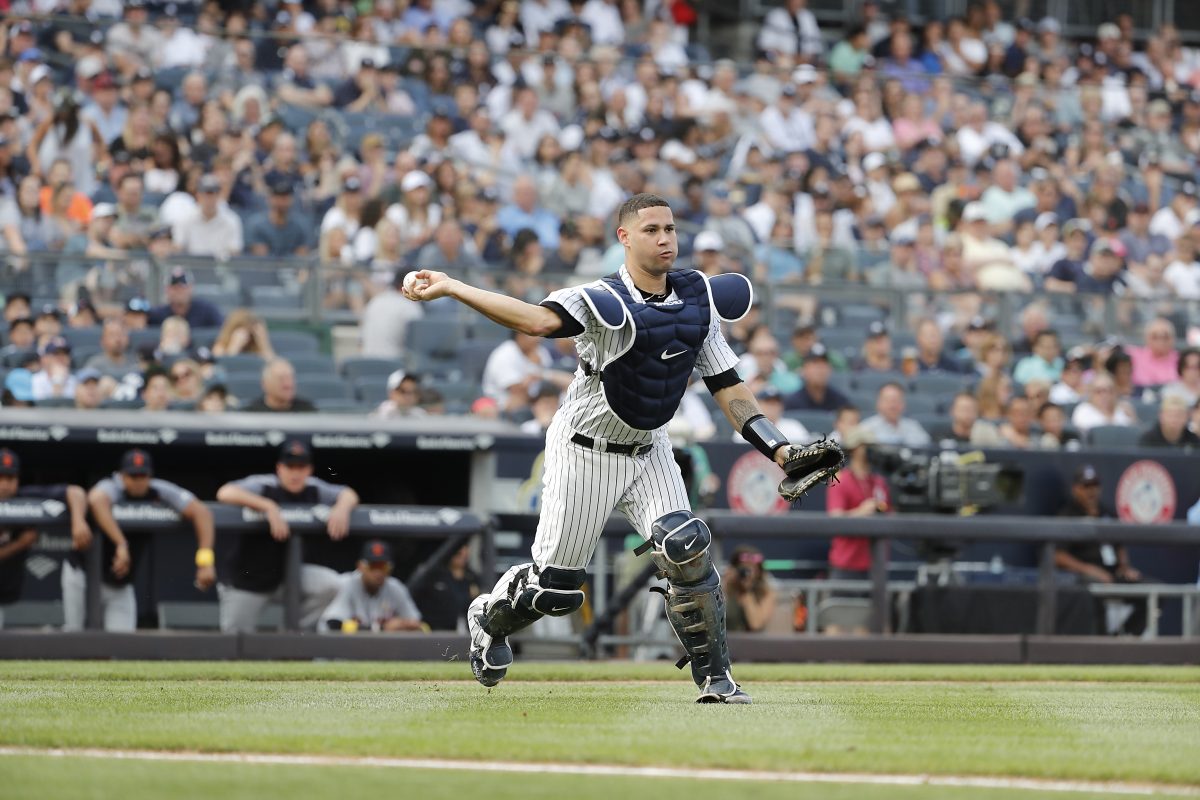
(This story originally appeared in the May 2019 edition of Yankees Magazine.)
Much like when I wrote about Clint Frazier, Gary Sánchez presented the perfect subject fo the type of story I like to write. He’s remarkably talented, with an incredible resume to date, and yet he draws the ire of so many fans because of whatever imperfections he might show. Undoubtedly, some of it is also racism; no one on the Yankees works harder than Sánchez, and you have to think that some of the accusations of laziness might be less prevalent if he looked more like Austin Romine.
In 2018, nothing went right for the young Yankees catcher. He couldn’t hit much, but more than that, he seemed to spend half of every game running to the backstop to chase passed balls. In reality, it wasn’t nearly as bad as it seemed, but it wasn’t good.

There were a couple of trips to the injured list on account of groin injuries, but when the year was done, the team announced he was having shoulder surgery on his catching arm. And suddenly things started making more sense. How hard must it be to catch a ball moving across the strike zone — especially in cases of cross-ups — if your shoulder is busted?
I chased Sánchez around for a few weeks, trying to get the interview I needed for this story. Mostly, he wouldn’t engage with my central question: What’s wrong with admitting that you’re hurt? What’s wrong with saying, “Yeah, I missed that ball, and it sucks, and I feel badly about it, but I’m doing the best I can.”?

When he finally answered me, I thought it was an incredibly illustrative look into the person he is, the competitor he wants to be, and the standards to which he holds himself.
“The fact of the matter is, we call it The Show. Our fans, they come here to watch us play, and they come here for the show. And I can say, in my experience, if I go to an event — it could be a concert, it could be a basketball game — I don’t go there to see them practice. I have no idea what they do to get ready for that. I just show up for the performance. And like fans, I judge them on what they do on the field. But yes, there’s a lot of work behind the scenes. There’s a routine that is done every day, many, many, many hours before the first pitch of the game. Some fans don’t know that or don’t see that, and that’s the way it is, and that’s the way it should be.”