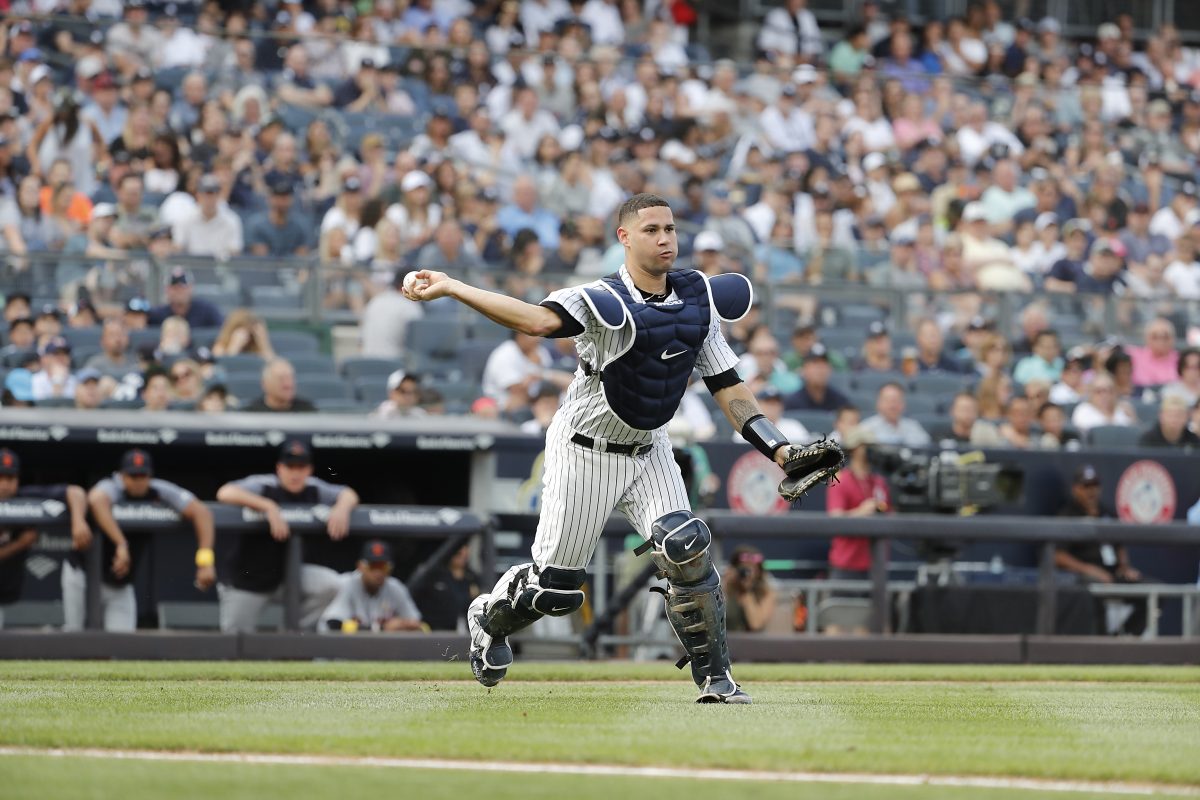
No Excuses

(This story originally appeared in the May 2019 edition of Yankees Magazine.)

Much like when I wrote about Clint Frazier, Gary Sánchez presented the perfect subject fo the type of story I like to write. He’s remarkably talented, with an incredible resume to date, and yet he draws the ire of so many fans because of whatever imperfections he might show. Undoubtedly, some of it is also racism; no one on the Yankees works harder than Sánchez, and you have to think that some of the accusations of laziness might be less prevalent if he looked more like Austin Romine.

In 2018, nothing went right for the young Yankees catcher. He couldn’t hit much, but more than that, he seemed to spend half of every game running to the backstop to chase passed balls. In reality, it wasn’t nearly as bad as it seemed, but it wasn’t good.

There were a couple of trips to the injured list on account of groin injuries, but when the year was done, the team announced he was having shoulder surgery on his catching arm. And suddenly things started making more sense. How hard must it be to catch a ball moving across the strike zone — especially in cases of cross-ups — if your shoulder is busted?

I chased Sánchez around for a few weeks, trying to get the interview I needed for this story. Mostly, he wouldn’t engage with my central question: What’s wrong with admitting that you’re hurt? What’s wrong with saying, “Yeah, I missed that ball, and it sucks, and I feel badly about it, but I’m doing the best I can.”?

When he finally answered me, I thought it was an incredibly illustrative look into the person he is, the competitor he wants to be, and the standards to which he holds himself.

“The fact of the matter is, we call it The Show. Our fans, they come here to watch us play, and they come here for the show. And I can say, in my experience, if I go to an event — it could be a concert, it could be a basketball game — I don’t go there to see them practice. I have no idea what they do to get ready for that. I just show up for the performance. And like fans, I judge them on what they do on the field. But yes, there’s a lot of work behind the scenes. There’s a routine that is done every day, many, many, many hours before the first pitch of the game. Some fans don’t know that or don’t see that, and that’s the way it is, and that’s the way it should be.”
https://www.mlb.com/news/gary-sanchez-doesn-t-make-excuses

The Understudy

(This story originally appeared in the July 2018 issue of Yankees Magazine.)

I’ve always wanted to write a story about the sensation of being a big-league backup. The fact is, though, most guys don’t want to talk about it, for obvious reasons, and it’s hard not to come off as a bit of an ass when you’re asking them.

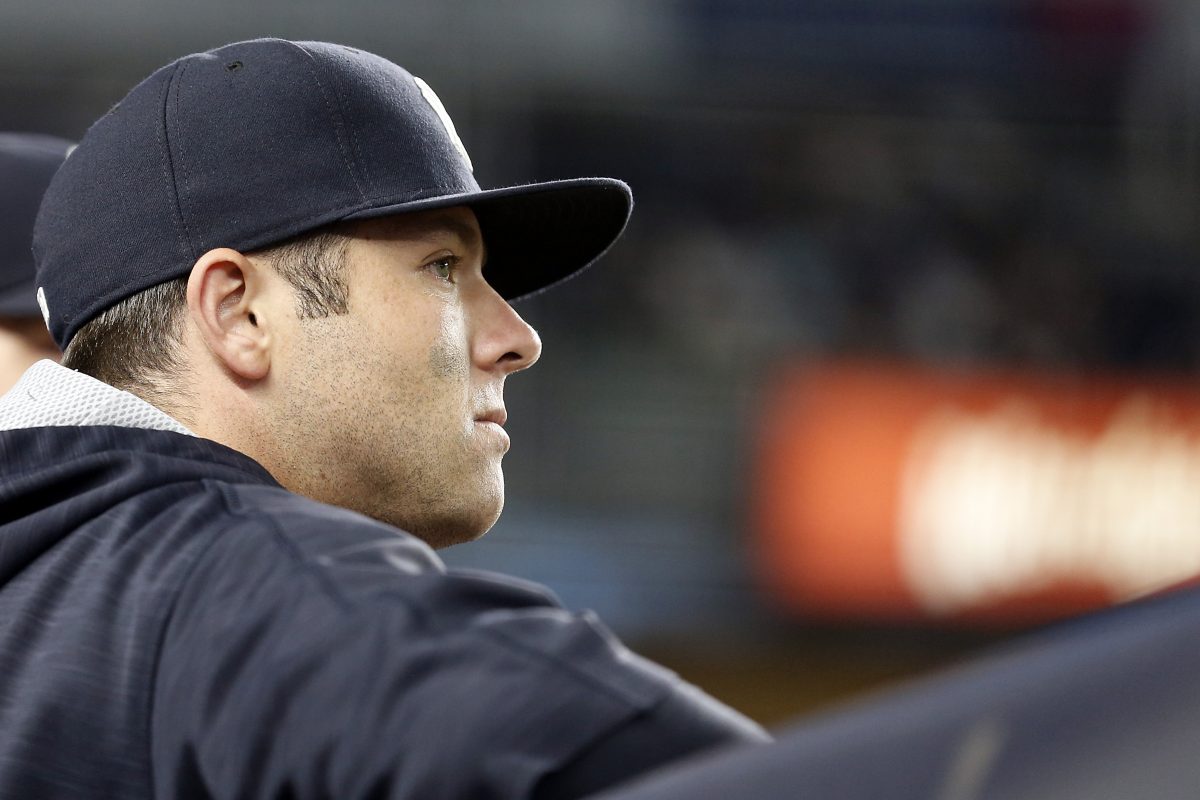
This season, though, Austin Romine was thriving in his role as Gary Sanchez’s back-up, and I felt that I had a good enough relationship with Austin to give it a try. What ensued was a really interesting, sometimes uncomfortable conversation with one of the most interesting guys in the Yankees’ clubhouse. Romine was very clear that the team is best when Gary Sanchez is catching, and he understands his role. But he also acknowledged that no one wants to play for the B team.

Of course, all this was before Sanchez got hurt, and Romine was thrust into the starting role, which, conveniently, was a hypothetical we discussed.

I really liked the conversation, and I appreciated Romine being willing to have the chat. Hope you’ll read and enjoy.

https://www.mlb.com/yankees/news/austin-romine-thrives-as-a-backup-catcher/c-284048780

The Road

(This story originally appeared in the July 2017 edition of Yankees Magazine.)

This one will always have a special place in my heart. Donny Sands’ story is incredible, and I feel truly fortunate to have been able to tell it. But the nature of how I came to write about him is still amazing to me.

My plan, when I booked a trip to Charleston, was to interview Blake Rutherford, the team’s top pick in the 2016 Draft and the third-ranked prospect in the whole system. Along with my photographer, Jim Petrozzello, we were going to ride the bus with Blake from Charleston to Columbia, South Carolina, and my story would look at life in the low minors for a major prospect. I was excited about the story (and excited to visit Charleston and to see South Atlantic League baseball for the first time), but I’m not sure the feature would have been anything mind-blowing.

The night before I left, I was chatting with a Yankees PR staffer, and out of nowhere, he mentioned to me that Rutherford had just been placed on the disabled list. I had no idea. It hadn’t been announced anywhere (the team wouldn’t even announce it until late the next day, long after I arrived at the ballpark in Charleston). If not for that conversation, I would have gotten to the park and found out that the player I had traveled to see wouldn’t even be playing. Even if I somehow still got a story out of it, we wouldn’t have any photos of him in action. It would have been a disaster.

Instead, I had about an hour to research an alternate story, and with some help from a coworker and a tip from another writer in the Yankees press box — YES Network’s Lou DiPietro — I settled on Donny Sands. I had never heard of him before that moment, but it turned out that he was learned how to play catcher, transitioning from the infield, and I figured that could be enough of a story. Plus, it seemed like there was some vague tragedy in his past.

When I got to Charleston, Donny was totally willing to chat. He sat with us for a while as we went over the basics of what we wanted to do, how we wanted to follow him around for three days without having given him any notice, and how we wanted him to really open up to me, a guy he had never met or even heard of. But he was game for everything. And man, did he ever open up. I still can’t believe how raw the story he told was, how hard I found it to accept the way that he had totally been left behind by all of the people who should have been responsible for his education and even lodging. That he made it to the point he had was incredible enough; that he was so open about it was even more shocking. The luck kept going my way. While we were chatting that first day, I thought to myself that I needed to make sure to talk to Josh Paul, the Yankees’ roving catching instructor. Paul goes all around the minors, working with players, and he was playing a huge role in Sands’ position switch. As I’m thinking this to myself, Donny mentioned that Paul was actually in town. So instead of talking to Donny about the training and then talking to Paul, I was able to stand there with them and actually watch it happen. I don’t know what I would have done otherwise.

Another key factor in my lucky streak: in mid-July, Rutherford was traded. It would have destroyed my story. Instead, Sands keeps developing. He’s still far away from themajors, but just a few days ago, he was promoted to High-A Tampa. It’s a long road to the majors. But Sands is doing his thing.

Donny has an incredible story. I hope I did it justice.

http://m.yankees.mlb.com/news/article/240570356/nyy-prospect-donny-sands-developing-as-catcher/?topicid=163658034

(I also recorded an audio feature for the story as part of the Yankees Podcast (please subscribe in iTunes or wherever you get podcasts!)