Master Craftsman

(This story originally appeared in the August 2018 issue of Yankees Magazine.)

I hope I’m wrong when I say this, but I’m not sure I’ll ever get to work on a more interesting reporting project. I had been circling something like this for a while, hanging out with a minor league roving instructor as he moved from town to town coaching different players. Between the Drew Henson scouting story that I wrote in 2016 and my feature last year about Donny Sands learning how to play catcher, I’ve long been fascinated by the people behind the scenes, the ones who help the players develop into major leaguers.

When I started asking around the Yankees front office, a bunch of people pointed me toward Danny Borrell, one of the team’s two pitching coordinators. I had never met Danny, had never heard of him, and didn’t really know what to expect. But he was open to the story from the start, and agreed to let me tag along on two trips — Staten Island and Pulaski.

The night before we started, he emailed me to say that he was actually going to be in Charleston instead of Pulaski, that something really big was happening. Normally, when big things happen around the team, we’re told to stay away. This was a rare case when I was being told that something huge was happening, and that I should make sure I was there for it. It was a no-brainer. 

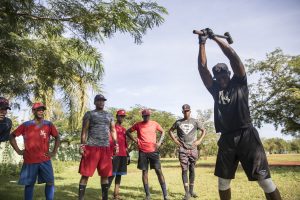
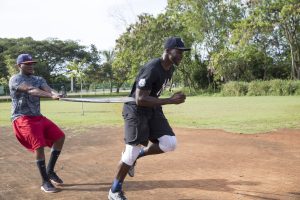
He wouldn’t tell me what the big news was until after it happened, so we spent the first few days just watching the way he interacted with all the young minor leaguers — Short-Season A-ballers in Staten Island, then Low-A players in Charleston. It was fascinating. Danny would strap on catching gear and catch all the bullpens (despite being A: left-handed; and B: a former pitcher). He just has the most positive way about him, always laughing, joking, teaching. The best thing about writing minor league stories is that you really get total access. I have never stepped in the bullpen at Yankee Stadium, but while I was following Danny around, I was basically standing next to the pitchers as they were doing their workouts. It was awesome.

Danny let me hang out in meetings, he let me stand over his shoulder as he watched video with players, he let me stay next to him while he watched the games. The only time he told me he needed me to stay away for a few minutes was when they had the big meeting. As it turned out, they were taking Dermis Garcia — a pretty substantial prospect in Charleston — and letting him try to pitch. Garcia has never pitched, but his arm from third base was incredible, and Borrell had long been pining to get him onto a mound. And after Brian Cashman and his team spent time in the offseason pursuing Shohei Ohtani, they were encouraged enough by the idea of a two-way player to see if Garcia might have the chops to handle it. So they presented it to him, he enthusiastically accepted, and the next day, we stood right along the bullpen as Garcia threw off a mound for the first time in his life.

This story was an absolute joy to write, everything I could have hoped for and more. I don’t think I’ll ever have access like this again. I’m happy with how it came out.

https://www.mlb.com/news/danny-borrell-molds-yankees-young-pitchers/c-287603796

Rocket Man

(This story originally appeared in the May 2018 issue of Yankees Magazine.)

Like the Greg Bird feature I had the opportunity to write in October of 2016, this piece was almost a full year in the making, in a way that caught me totally by surprise. It started in June of 2017, when I was down in Charleston reporting a story on Donny Sands. Low-A baseball looks a lot different from what I’m used to seeing in the Bronx, but the truly elite prospects stick out. And I couldn’t take my eyes off this kid in the outfielder, a guy I’d never heard of named Estevan Florial. After the first game I saw down there, I met up with my photographer, and immediately, he asked me, “Hey, what do you know about Floral?” He was that impressive.

A month later, I was in Miami for the MLB All-Star Game, and Florial was one of two Yankees representatives in the Futures Game. One part of his story really interested me — the fact that he was from Haiti. Despite sharing an island with the Dominican Republic, which produces more baseball players than you can count, there has never been a major leaguer from Haiti. In the clubhouse before the game, I asked him about it (as he dressed in a uniform that had a Haitian flag on the chest). He told me that he was actually from the Dominican Republic, which confused me. I kind of restated the question, and he gave me the same answer. I figured there was some sort of language barrier (Florial speaks English well, but it’s still not his first language).

Fast forward three more months, and Florial is part of the contingent in the Arizona Fall League. I tried to find out again — what did he mean that he wasn’t from Haiti? Is he saying that he barely lived there, then moved to the DR? No, he told me. He was born in the Dominican Republic.

Now I was really confused, so I started poking around. What I found was a remarkable story of perseverance, of determination, of a great kid whose dream was almost broken by a well-intentioned system that was nonetheless unprepared to handle a story like his.

So when I was down in the Dominican Republic to report on my Luis Severino feature, I arranged to spend some time with Florial, as well. He gave me the whole story, the let me hang out as he worked out with some young kids and his old coach. I also spent some time with Bernie Tatis, the scout/manager/agent who discovered Estevan years ago, when he was named Haniel D’Oleo. 

This was a remarkable story, one I was privileged to tell. I hope I did Estevan and his family justice, and I’m so grateful he trusted me enough to open up the way he did. I definitely root for most of my story subjects to do well — especially with the minor leaguers, it just makes the story look better if the kid turns into something. But I don’t care if Estevan never makes it to the majors. I’ll always cherish the time he gave me, and I’ll always be proud of this story.


https://www.mlb.com/yankees/news/estevan-florial-ready-to-make-name-for-himself/c-274705446?tid=163658034


The Road

(This story originally appeared in the July 2017 edition of Yankees Magazine.)

This one will always have a special place in my heart. Donny Sands’ story is incredible, and I feel truly fortunate to have been able to tell it. But the nature of how I came to write about him is still amazing to me.

My plan, when I booked a trip to Charleston, was to interview Blake Rutherford, the team’s top pick in the 2016 Draft and the third-ranked prospect in the whole system. Along with my photographer, Jim Petrozzello, we were going to ride the bus with Blake from Charleston to Columbia, South Carolina, and my story would look at life in the low minors for a major prospect. I was excited about the story (and excited to visit Charleston and to see South Atlantic League baseball for the first time), but I’m not sure the feature would have been anything mind-blowing.

The night before I left, I was chatting with a Yankees PR staffer, and out of nowhere, he mentioned to me that Rutherford had just been placed on the disabled list. I had no idea. It hadn’t been announced anywhere (the team wouldn’t even announce it until late the next day, long after I arrived at the ballpark in Charleston). If not for that conversation, I would have gotten to the park and found out that the player I had traveled to see wouldn’t even be playing. Even if I somehow still got a story out of it, we wouldn’t have any photos of him in action. It would have been a disaster.

Instead, I had about an hour to research an alternate story, and with some help from a coworker and a tip from another writer in the Yankees press box — YES Network’s Lou DiPietro — I settled on Donny Sands. I had never heard of him before that moment, but it turned out that he was learned how to play catcher, transitioning from the infield, and I figured that could be enough of a story. Plus, it seemed like there was some vague tragedy in his past.

When I got to Charleston, Donny was totally willing to chat. He sat with us for a while as we went over the basics of what we wanted to do, how we wanted to follow him around for three days without having given him any notice, and how we wanted him to really open up to me, a guy he had never met or even heard of. But he was game for everything. And man, did he ever open up. I still can’t believe how raw the story he told was, how hard I found it to accept the way that he had totally been left behind by all of the people who should have been responsible for his education and even lodging. That he made it to the point he had was incredible enough; that he was so open about it was even more shocking. The luck kept going my way. While we were chatting that first day, I thought to myself that I needed to make sure to talk to Josh Paul, the Yankees’ roving catching instructor. Paul goes all around the minors, working with players, and he was playing a huge role in Sands’ position switch. As I’m thinking this to myself, Donny mentioned that Paul was actually in town. So instead of talking to Donny about the training and then talking to Paul, I was able to stand there with them and actually watch it happen. I don’t know what I would have done otherwise.

Another key factor in my lucky streak: in mid-July, Rutherford was traded. It would have destroyed my story. Instead, Sands keeps developing. He’s still far away from themajors, but just a few days ago, he was promoted to High-A Tampa. It’s a long road to the majors. But Sands is doing his thing.

Donny has an incredible story. I hope I did it justice.

http://m.yankees.mlb.com/news/article/240570356/nyy-prospect-donny-sands-developing-as-catcher/?topicid=163658034

(I also recorded an audio feature for the story as part of the Yankees Podcast (please subscribe in iTunes or wherever you get podcasts!)