Ready for Liftoff

(This story originally appeared in the August 2020 edition of Yankees Magazine.)

I can’t say that I’ve ever been one of those baseball fans who obsesses over prospects. The fact is, there’s so much projection involved, so much luck, so much precarious uncertainty, that sometimes it’s just smarter to wait until they do something before you fall in love. It helps that the teams that a I root for / work for are in big markets (or, in the case of the Mets, are in a big market but insist on pretending that they’re not) and are usually trading prospects for major league–ready players, rather than the other way around.

With that said, most of my favorite stories to write during my time in baseball have been minor league features. The access is about 4,000 times better than what you get with big leaguers and the stories are just more interesting. Sure, there are grinders who you’ll find in a big-league clubhouse, but it’s not too often that you’re going to be the one to tell the ultimate story about a guy’s harrowing adventure to establish an identity, as I was able to do with Estevan Florial, or to shine a light on the tumultuous life of a low-minors infielder who — having overcome homelessness during high school — is learning to play catcher on the fly, as I could with Donny Sands. When I lucked into telling the story of the Yankees attempting to turn Dermis Garcia into a pitcher, it was the type of feature that almost by definition couldn’t come from the clubhouse in Yankee Stadium. They just don’t do that stuff up in the majors.

New York Yankees

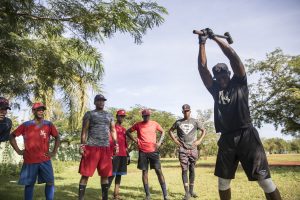
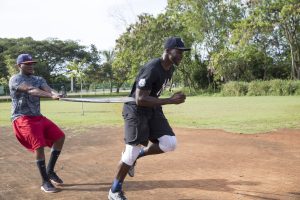
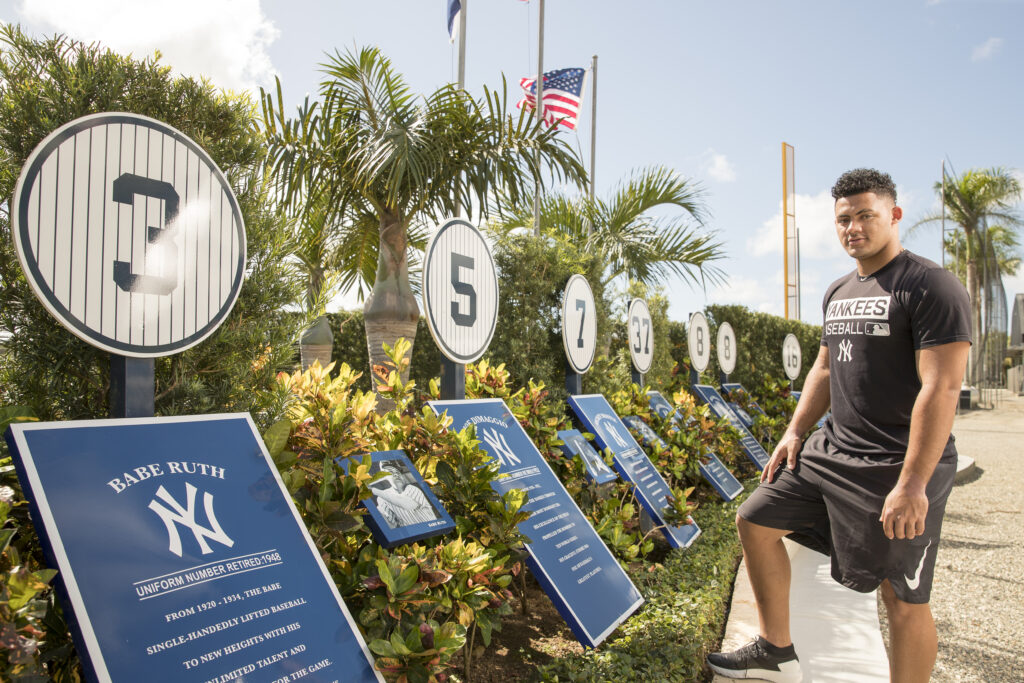
With Jasson Dominguez, some of both sides of that dichotomy came into play. First off, he’s as exciting a prospect as you’ll see, this massive tank of a person, just 16 years old when we were chatting. He’s a kid, but he’s also the guy who signed the biggest contract ever in the international signing period. The Yankees made a huge bet on the young Dominican, and when you see him for the first time, all you can do is nod and say, “Yeah, that makes sense.” As Donny Rowland, the Yankees’ international scouting director, said, “He’s the kind of player that makes the hair on your arm stand up when you watch him”

Back in January, I spent a few days with Jasson at the Yankees’ Dominican Baseball Academy. This was before the world came crashing down, as the youngster was embarking on his first full year in the system, starting down a road that could eventually lead him to the Bronx. I was there on his first day of on-field work for the year, when he struggled to make a nice-and-easy toss to his throwing partner. I watched him airmail like 12 balls, worried that my presence was making this kid nervous. Then it hit me: he’s never thrown a ball nice and easy in his entire life. Dominguez had been working since he was about 5 years old for the chance to play on a big-league field. He’s had scouts and advisers watching him his whole life, a constant need to put on a show. His life has been about showing how hard he could throw, not about showing that he could just toss a ball back and forth. It was illuminating, in not entirely positive ways.

Who knows what this lost year will do the Dominguez’s timeline. It was possible that he could have spent some time in one of the American short-season leagues this year, whether in Pulaski or Staten Island. Instead, he continues to wait. And while he does, the legend of the Martian will continue to grow in absentia.

I really enjoyed writing this one. It was fun to meet Jasson, fun to tell his story, and it’s always nice to go to the Dominican Republic (I even got to check out a game in the Dominican World Series while I was there, which was awesome). Who knows how long it will be before I can travel for another baseball story, so that part makes for a fun memory, as well.
New York Yankees

https://www.mlb.com/yankees/news/jasson-dominguez-is-ready-for-liftoff?t=yankees-magazine

Rocket Man

(This story originally appeared in the May 2018 issue of Yankees Magazine.)

Like the Greg Bird feature I had the opportunity to write in October of 2016, this piece was almost a full year in the making, in a way that caught me totally by surprise. It started in June of 2017, when I was down in Charleston reporting a story on Donny Sands. Low-A baseball looks a lot different from what I’m used to seeing in the Bronx, but the truly elite prospects stick out. And I couldn’t take my eyes off this kid in the outfielder, a guy I’d never heard of named Estevan Florial. After the first game I saw down there, I met up with my photographer, and immediately, he asked me, “Hey, what do you know about Floral?” He was that impressive.

A month later, I was in Miami for the MLB All-Star Game, and Florial was one of two Yankees representatives in the Futures Game. One part of his story really interested me — the fact that he was from Haiti. Despite sharing an island with the Dominican Republic, which produces more baseball players than you can count, there has never been a major leaguer from Haiti. In the clubhouse before the game, I asked him about it (as he dressed in a uniform that had a Haitian flag on the chest). He told me that he was actually from the Dominican Republic, which confused me. I kind of restated the question, and he gave me the same answer. I figured there was some sort of language barrier (Florial speaks English well, but it’s still not his first language).

Fast forward three more months, and Florial is part of the contingent in the Arizona Fall League. I tried to find out again — what did he mean that he wasn’t from Haiti? Is he saying that he barely lived there, then moved to the DR? No, he told me. He was born in the Dominican Republic.

Now I was really confused, so I started poking around. What I found was a remarkable story of perseverance, of determination, of a great kid whose dream was almost broken by a well-intentioned system that was nonetheless unprepared to handle a story like his.

So when I was down in the Dominican Republic to report on my Luis Severino feature, I arranged to spend some time with Florial, as well. He gave me the whole story, the let me hang out as he worked out with some young kids and his old coach. I also spent some time with Bernie Tatis, the scout/manager/agent who discovered Estevan years ago, when he was named Haniel D’Oleo. 

This was a remarkable story, one I was privileged to tell. I hope I did Estevan and his family justice, and I’m so grateful he trusted me enough to open up the way he did. I definitely root for most of my story subjects to do well — especially with the minor leaguers, it just makes the story look better if the kid turns into something. But I don’t care if Estevan never makes it to the majors. I’ll always cherish the time he gave me, and I’ll always be proud of this story.


https://www.mlb.com/yankees/news/estevan-florial-ready-to-make-name-for-himself/c-274705446?tid=163658034


Up, Down and Back Again

(This story originally appeared in the April 2018 issue of Yankees Magazine.)

I can’t say enough about how much I enjoyed writing this story, and how pleased I was with the outcome. I went down to Santo Domingo in January to spend some time with Luis Severino for this story, and with Estevan Florial for one that would run in May.

My goal was mainly to watch Severino work out, to see how what his life at home was like. I had never been to the Dominican Republic, so I really had no clue what to expect. But we all watched Sevy grow up before our eyes in 2017, then saw him crash head-first into a wall in the AL Wild Card Game. He lasted only a third of an inning that night, an utter disaster for a pitcher who would end up finishing third in AL Cy Young voting.

But when the Yankees came back to beat the Twins, Severino got another chance to show who he really was, and he was very effective the rest of the postseason. So the two of us spoke a lot about that whole roller-coaster experience, and how similar it was to what he experienced in 2016, when — after a brilliant 2015 debut — he was simply dreadful as a starting pitcher. He obviously came back in 2017 and showed what he could do, much as he did in the 2017 postseason. So what did he learn from that first turnaround? What was he applying? And how was he approaching his new role as the team’s ace, the eventual Opening Day starter?

I’m basically in awe of guys like Severino. So talented, so genuinely nice and interesting, such a bright future. One highlight of the trip was that we conducted our main interview with him at his apartment. All along, his wife and mother were in the kitchen cooking lunch. After we wrapped up, we shook hands and started to say goodbye, but he told us that we had to stay for lunch, that they were cooking for us, that we were their guests. I’ve been out to eat with players before during interviews, and it’s always a bit strange to share a meal under those circumstances. This was just a giant feast in the guy’s house, the food delicious and fresh. It was typical of the way that guests are treated in the culture, and my photographer was actually surprised that I had been so surprised. He had figured all along that they were cooking for us. Shows what I know.

That’s what the guy is like, though. I mentioned in a podcast recently that a lot of players, when they don’t want to deal with an interview, will say something like, “I’ve got to go run.” Severino will say that he has to go run, then he’ll go run, then he’ll come back and seek you out because he remembers that you needed him. He’s still so young, but he’s such a pro, a very easy guy to cheer for.

Hope you enjoy this one.

https://www.mlb.com/yankees/news/luis-severino-armed-with-2017-playoff-lessons/c-269277258?tid=163658034