(This story originally appeared in theSeptember 2021 edition of Yankees Magazine.)
For Part 2 of my overhead view of pandemic baseball, I focused mainly on the sights and (lack of) sounds in Yankee Stadium. Covering baseball in 2020 was an enormous challenge, with magazine deadlines looming and black pages staring back at you despite next to no access to the players. One of the great joys of writing about baseball is the downtime. As frustrating as it can be sometimes to stand around a Yankees’ clubhouse with 50 other reporters and no baseball players to be found, there’s still so much that we can all learn from getting to chat with players, to make small talk, to ask questions out of view of the entire beat.
Obviously, everyone knew that things would be different in 2020, but as one of very few people who could be in the park during games, I really wanted to give a sense of what it looked and sounded and felt like. I wanted to know how players got themselves amped up, how gameday operations employees tried to get some sound into the atmosphere to trick the players’ brains, and how everyone tried to make the games feel as normal as possible. I also spent time chatting with all the people who made the YES Network broadcasts work despite the announcers sometimes calling games from three time zones away.
I’m proud of this series, and of the way that I think it will stand as a reminder of how weird everything was in 2020, even when we were kind of pretending things were normal again.
(This story originally appeared in the August 2020 edition of Yankees Magazine.)
I can’t say that I’ve ever been one of those baseball fans who obsesses over prospects. The fact is, there’s so much projection involved, so much luck, so much precarious uncertainty, that sometimes it’s just smarter to wait until they do something before you fall in love. It helps that the teams that a I root for / work for are in big markets (or, in the case of the Mets, are in a big market but insist on pretending that they’re not) and are usually trading prospects for major league–ready players, rather than the other way around.
With that said, most of my favorite stories to write during my time in baseball have been minor league features. The access is about 4,000 times better than what you get with big leaguers and the stories are just more interesting. Sure, there are grinders who you’ll find in a big-league clubhouse, but it’s not too often that you’re going to be the one to tell the ultimate story about a guy’s harrowing adventure to establish an identity, as I was able to do with Estevan Florial, or to shine a light on the tumultuous life of a low-minors infielder who — having overcome homelessness during high school — is learning to play catcher on the fly, as I could with Donny Sands. When I lucked into telling the story of the Yankees attempting to turn Dermis Garcia into a pitcher, it was the type of feature that almost by definition couldn’t come from the clubhouse in Yankee Stadium. They just don’t do that stuff up in the majors.
New York Yankees
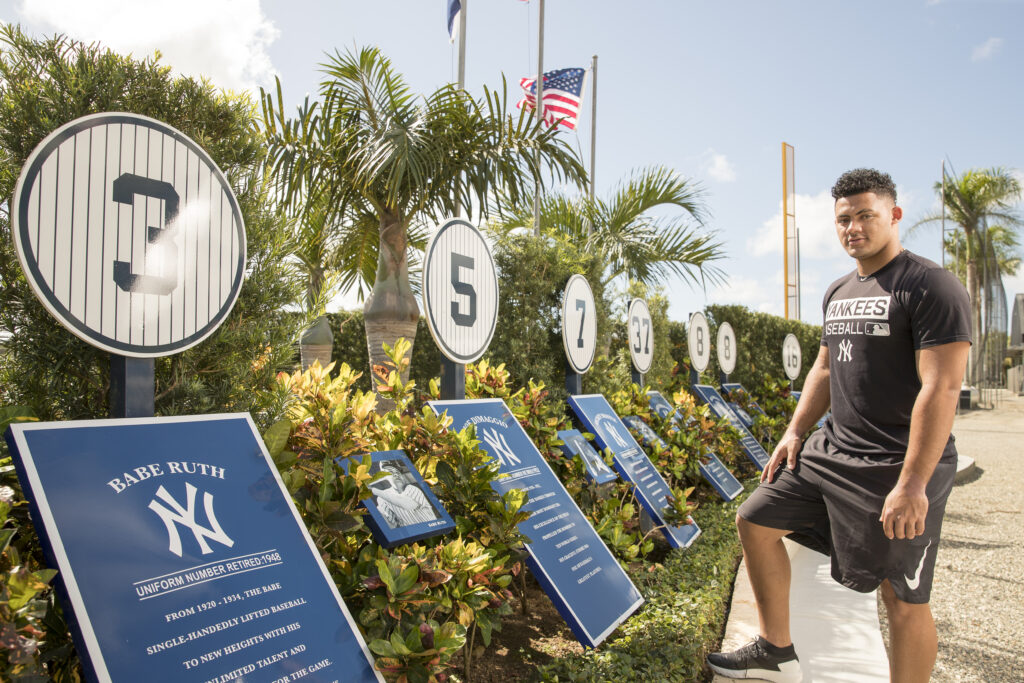
With Jasson Dominguez, some of both sides of that dichotomy came into play. First off, he’s as exciting a prospect as you’ll see, this massive tank of a person, just 16 years old when we were chatting. He’s a kid, but he’s also the guy who signed the biggest contract ever in the international signing period. The Yankees made a huge bet on the young Dominican, and when you see him for the first time, all you can do is nod and say, “Yeah, that makes sense.” As Donny Rowland, the Yankees’ international scouting director, said, “He’s the kind of player that makes the hair on your arm stand up when you watch him”
Back in January, I spent a few days with Jasson at the Yankees’ Dominican Baseball Academy. This was before the world came crashing down, as the youngster was embarking on his first full year in the system, starting down a road that could eventually lead him to the Bronx. I was there on his first day of on-field work for the year, when he struggled to make a nice-and-easy toss to his throwing partner. I watched him airmail like 12 balls, worried that my presence was making this kid nervous. Then it hit me: he’s never thrown a ball nice and easy in his entire life. Dominguez had been working since he was about 5 years old for the chance to play on a big-league field. He’s had scouts and advisers watching him his whole life, a constant need to put on a show. His life has been about showing how hard he could throw, not about showing that he could just toss a ball back and forth. It was illuminating, in not entirely positive ways.
Who knows what this lost year will do the Dominguez’s timeline. It was possible that he could have spent some time in one of the American short-season leagues this year, whether in Pulaski or Staten Island. Instead, he continues to wait. And while he does, the legend of the Martian will continue to grow in absentia.
I really enjoyed writing this one. It was fun to meet Jasson, fun to tell his story, and it’s always nice to go to the Dominican Republic (I even got to check out a game in the Dominican World Series while I was there, which was awesome). Who knows how long it will be before I can travel for another baseball story, so that part makes for a fun memory, as well.
(This story originally appeared in the August 2020 editionof Yankees Magazine.)
It’s hard to explain how weird it is to be writing about baseball right now. The diversions I’ve taken in the past few months to writing music stories … those have just been so much easier. I’m not even totally sure about why — after all, one of the stories I wrote was about going to three concerts in London days before the world shut down due to COVID-19. I’m not sure that was any more responsible than a baseball game; in fact, it was certainly more dangerous.
But there’s the obvious fact that for a lot of us, the idea of baseball (or any American sports) coming back when the tri-state area was exploding in March and April was as some future reward for good behavior. If we stayed home like we were told, and if we did everything we could to let the virus run its course, we could get our normal lives back.
New York Yankees
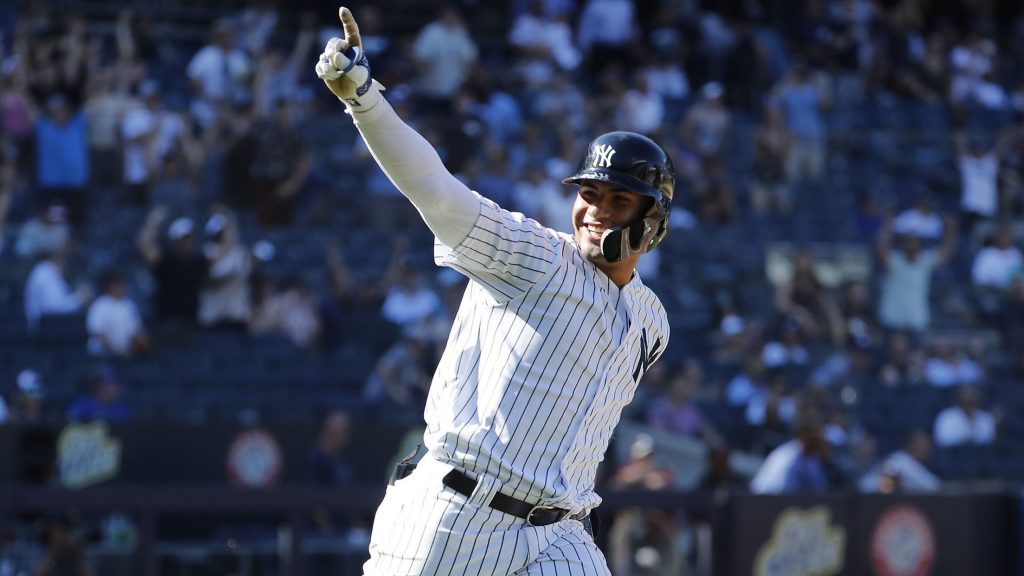
Instead, the situation today is objectively worse than it was even when the hospitals in New York City were overflowing. But here we are. If you can’t tell, I’m not thrilled about any of this, and it has felt really dirty these last few weeks to be putting out a magazine, even before Juan Soto tested positive on the day of the opener. You almost want it to rain, a feeling I’ve never before had on Opening Day. So it goes.
Anyhow!
My job demands that I enthusiastically welcome the return of the game that I do truly love. And I’m going to watch this season, cheering on some great stories, closely watching a Yankees team that should be legitimately special. So when I was assigned a story about the months that have led up to baseball returning, I didn’t want to go all Debbie Downer and pour cold water on everyone’s plans. Instead, I tried to look at some things we might not have been looking at that were going on while we should have been playing baseball.
New York Yankees
For example, I spoke to YES Network executives about running a sports network without sports. I spoke to a minor league marketing executive about marketing a league that doesn’t really exist this year. I chatted with players about using their time away to protest and support the Black Lives Matter movement, and I spoke to another guy on the team about playing video games semi-professionally in the interim.
Like I’ve said, none of this is going to be easy. Maybe we should be playing, maybe we shouldn’t. But the fact is, we are. So we might as well enjoy it, because, for better — or more likely, for worse — baseball is back. Finally.
This one came out of nowhere. I was planning on traveling to Las Vegas for a conference, and because I was going two-thirds of the way across the country, and because a co-worker had a sudden conflict arise, my editor suggested that I follow up the Vegas trip by checking out an Aaron Judge All Rise Foundation event in Fresno, California. Obviously, I wasn’t about to say no to that.
Since I was heading out there with a few days to spare, I somehow convinced Aaron’s people to let me go to the fundraising dinner they were holding, then spent some time at Fresno State’s football game two nights later, where they honored Judge on the field. In between, I used some downtime to check out Yosemite National Park.
The story that I eventually wrote came out a lot of confusion I was feeling throughout my time in Fresno. The events were … small? I don’t mean that in a negative way, and I think it’s probably a function of my New York–area mentality that I even bumped against it. But the fundraiser didn’t have any media, didn’t have any celebrities. It certainly could have. If Judge had allowed the media inside (or even outside), plenty of reporters would have jumped at the chance. I was there almost by accident.
In spending time around the family, and with Aaron’s agent, what became very clear was that this was by design. It’s not that they don’t have big goals for the foundation, it’s just that they want to honor those who have been with them from the start. What they seem to be saying is that there will come time for the massive events. For now, though, better to reward those who have been loyal. It was blindingly obvious as I watched Aaron chatting with his former college teammates that it just doesn’t cross his mind that there might be some distance between them, some difference in where the world has taken them. That’s remarkable, and it’s a skill!
Aaron’s family is insistent on loyalty, almost fanatically so. And as you talk to his parents, Patty and Wayne, and watch them interact with people, you can see how Aaron became the way he is, the standup superstar in New York, the humble megastar.
I really tried to show that side of him, and the way he got where he is. Largely, what I saw was that he is who he has always been, in a good way. I hope you’ll read and enjoy.
(This story originally appeared in the October 2019 edition of Yankees Magazine.)
I’ve definitely written more words about CC Sabathia than any other person or subject in my career. I’m not sure exactly how it started, I just felt a quick rapport with him as I started my Yankees career, and I was able to mine about five very personal, very in-depth stories out of him.
In that time, I’ve been to two of CC’s houses, I’ve shared meals with him on the road, I’ve hung out around his kids. I ran a marathon on his PitCCh In Foundation’s running team. I packed backpacks that he and Amber would give to young school kids.
CC is a special guy, a huge heart, an amazing talent, a real hero to so many baseball fans. When he struggled, he wore it for everyone to see. When he thrived, fans felt every bit of his joy and intensity. He was so dominant for so long, then relied on smarts to finish his journey. In the end, with more than 3,000 strikeouts and more than 250 wins, he seems a sure get a spot in Cooperstown. He earned it.
Last year, I wrote a long feature about his career, figuring it might be the end of the road. When he came back for one more year, I decided that I wanted to do something different. I wanted to look at the role that baseball played in who he was, and what life would be like for him — and for the Yankees — when it was over. So I followed him a bit around the city and around the country, all the while trying to find out what sense of nostalgia he was feeling. The answer, usually, was none. He would laugh, but would say that he just wasn’t feeling it yet. He told amazing stories about his time in the game, about his dreams, but he said that he was also looking forward to it being done.
I told him he had to make me a promise. The minute he started feeling nostalgic, he had to promise to let us know. He laughed.
In the end, the injuries won out, and it looked like CC’s career was going to end even before his last postseason. When he was able to get that spot on the ALCS roster, I was thrilled to see him get one more shot on the mound. When he came in for Game 4, and we all figured it was possibly his last time on the Yankee Stadium mound, we all watched extra close. When his shoulder gave out, and he had to walk off the field in pain, next to trainer Stevie Donohue … it was one of the hardest things I’ve watched on a baseball field.
The next day, arm in a sling, CC was laughing. He knew it was over, but he loved the ride, loved leaving it all out on the field. He told stories about the fact that shit never could start until he was ready. It was awesome, albeit too late to get into the story.
That said, I’m thrilled with this one. I love the way it tells Amber’s story alongside his. I love the quotes from Mark Teixeira about the things he misses, about success, and the desire to hit home runs again. I love when Amber says that they grew up in the game, but now they’ve grown out of it.
I’m going to miss covering CC Sabathia, but I’m so lucky to have gotten to write about him so much over the years. I hope I did it well.
(This story originally appeared in the September 2019 edition of Yankees Magazine.)
A real project for me this year was to try to get away from the typical 25 guys you see in a baseball clubhouse. I wanted to tell different stories, and one thing I really sought was the chance to tell some stories about women and their places around the game.
So when I was able to combine that goal with my interest in writing about Deivi Garcia, I pounced.
I first saw Garcia pitch last year, when I was writing about then-Yankees pitching coordinator Danny Borrell. Garcia was this tiny guy with amazing stuff; I couldn’t believe what I was watching, but I was writing about Borrell (and, it turned out, another Garcia — Dermis — so there wasn’t room in that story for much on Deivi).
Then, this year, Deivi Garcia broke out, and ended the season with Triple-A Scranton/Wilkes-Barre. And his presence there allowed me to write about his journey, but also about Blayke Scheer, and the YES Network program HOMEGROWN.
Everyone around the Yankees knows Blayke, her voice, her style. She is the consummate producer, always around, always solving problems, always helping everyone around her. And the show she produces is just so perfect for the minor leagues — a version of HARD KNOCKS with a smaller focus. I got to spend time behind the scenes, as she developed segments, did her confessional interviews, schmoozed with players to help build the rapport that comes through so clearly during the broadcast.
I think that both sides of the story worked well, and it all synthesized well into solid piece.
(This story originally appeared in the August 2019 edition of Yankees Magazine.)
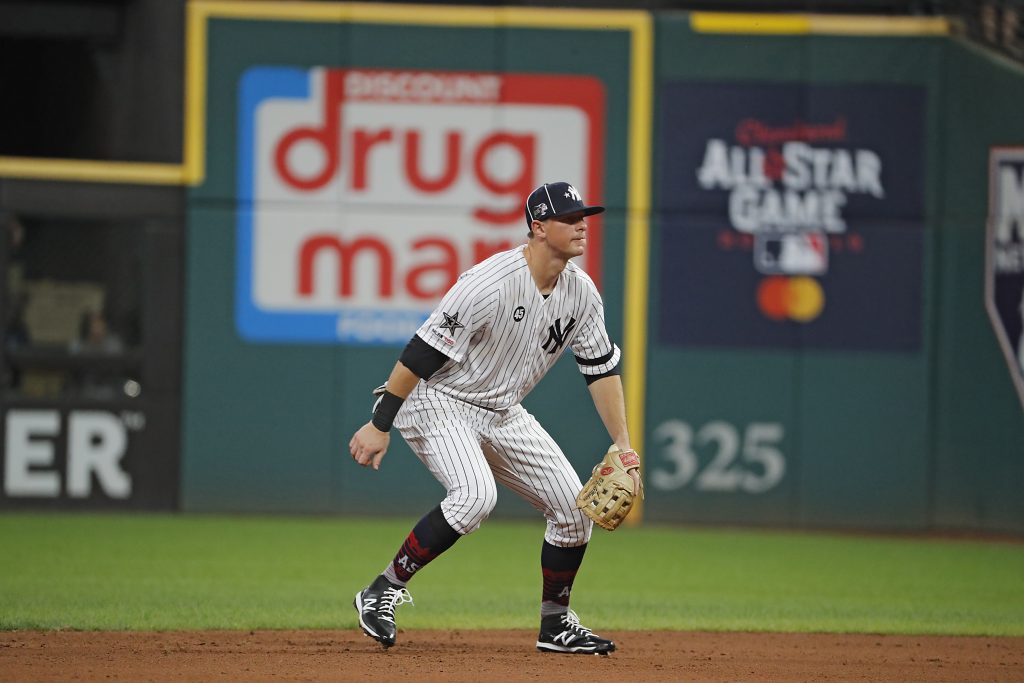
This must have been part of a masochistic streak, trying to get a real good sense of DJ LeMahieu, by far the most reticent and reluctant interview on the 2019 Yankees. But I actually had a ton of fun with this piece, and if I had to guess, I think LeMahieu even enjoyed a bit of the ping-pong match.
The story really began on my first day in spring training this year. Walking around the Yankees’ clubhouse in Tampa, I introduced myself to LeMahieu, one of the new guys, and tried to engage him in a “Quick Hits” interview — real lightning-round style questions that show a bit of personality, quirk, etc. He wanted absolutely nothing to do with it. He wasn’t rude, but he still answered “pass” about half the time. I walked away figuring I would never need to talk to him again.
But then LeMahieu turned into the Yankees’ best hitter, and found himself at the All-Star Game. And I kept trying to get to know him as best I could, and he kept demurring. Again, he wouldn’t blow me off, and he wouldn’t bristle or scowl. He just had very little to say. He’s a private guy, intense, but you can tell that he’s genuinely nice and probably pretty interesting.
In Cleveland during All-Star Week, I plopped myself down in front of him about four different times. Each time, he seemed to find the whole experience progressively funnier. It was a media circus, so it’s not like it was 1-on-1, but I still got in more questions in those settings than I did in pursuing the line of questioning for a few weeks around the Yankees’ clubhouse.
In the end, I think the story does a good job showing who LeMahieu is and why we shouldn’t be surprised to see him doing this well. The best thing I can say about it is that I don’t think that you can tell when you’re reading it how hard I had to work to get the quotes.
(This story originally appeared in the August 2019 edition of Yankees Magazine.)
I wasn’t born when Thurman Munson died, and for most of my life, I kind of viewed him through a lens of a cynical outsider. It was easy to kind of dismiss him as a guy beloved on account of a tragic ending.
I had never really forced myself to look at how impressive he was on the field, what he meant to fans in life, not just in death, the way he operated in the clubhouse and on the field. For any cynicism I have had about Derek Jeter’s role as a Yankees captain, I think I was similarly blind, prone to undervaluing Thurman Munson.
So it was great to spend as much time as I did this summer researching him, leading up to an afternoon in Canton, Ohio, that I’ll never forget, when I spent time with his widow, Diana, and his son, Michael.
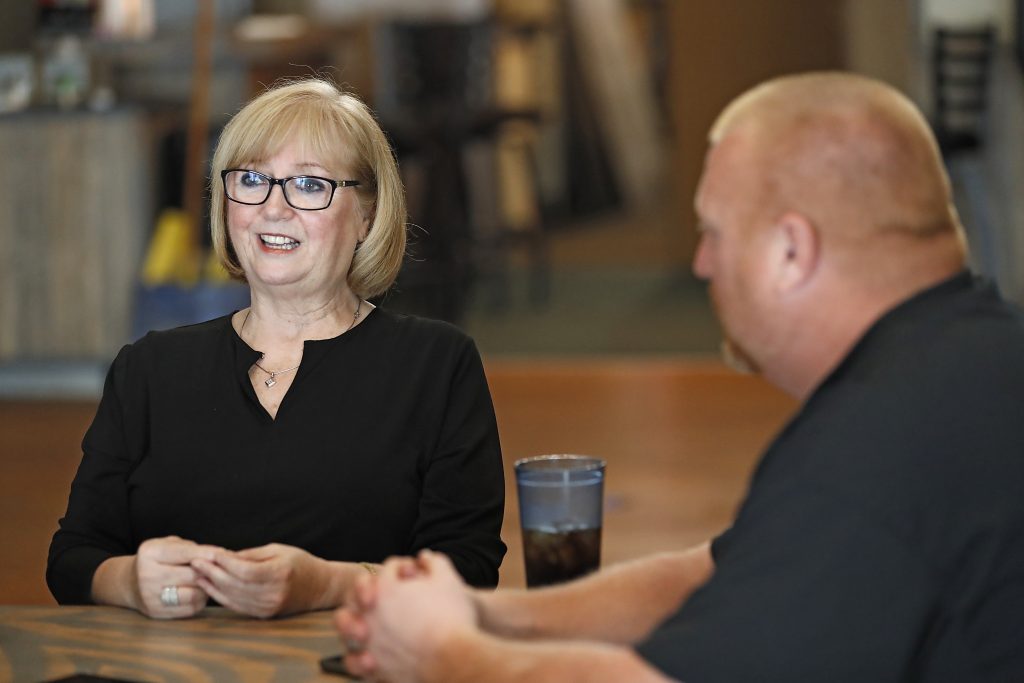
We met at Michael’s bar, then spent hours chatting. I learned more than I could have imagined. Diana was open about Thurman’s less-awesome qualities, candid about the ways that he could be a bully. I saw her pugnaciousness, the ways that she would push back against him.
But what I saw the most was the way that she carries on as Thurman’s legacy, a real living monument. She ripped open scars and told me about the worst moments of her life, but also spoke at length about her work to keep her late husband’s memory at the forefront. She continues raising money for the AHRC, continues showing up at Yankee Stadium on Old-Timers’ Day, so that the fans can cheer her for her husband.
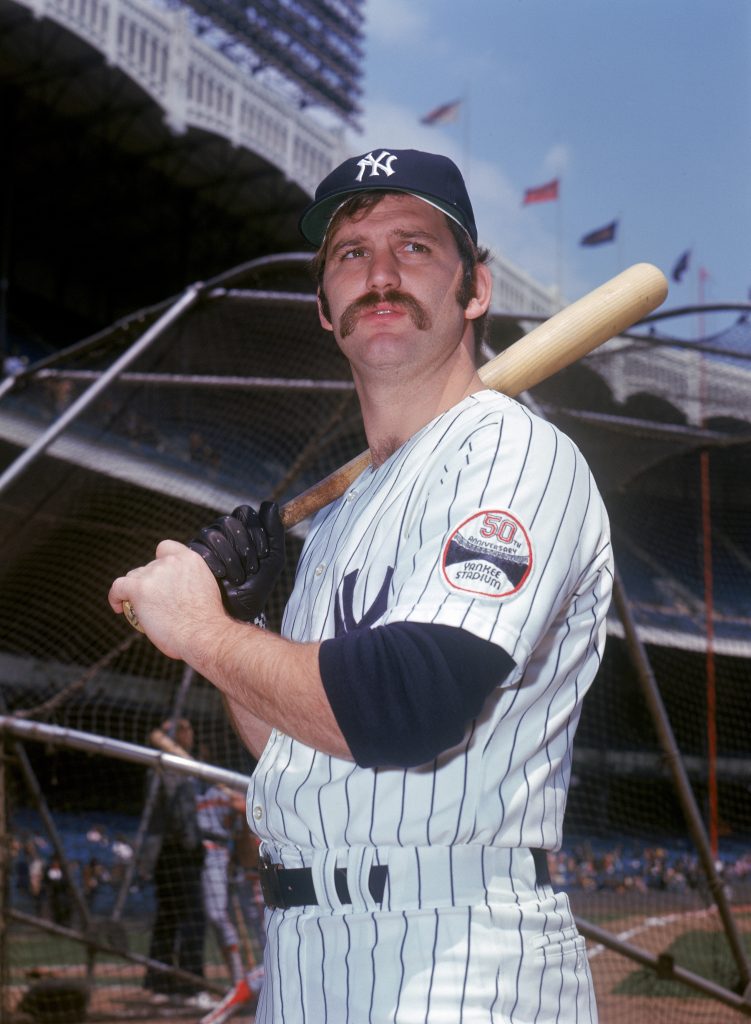
NEW YORK – UNDATED: Thurman Munson #15 of the New York Yankees poses for a portrait circa 1969-79 at Yankee Stadium in the Bronx, New York. (Photo by Louis Requena/MLB Photos via Getty Images)
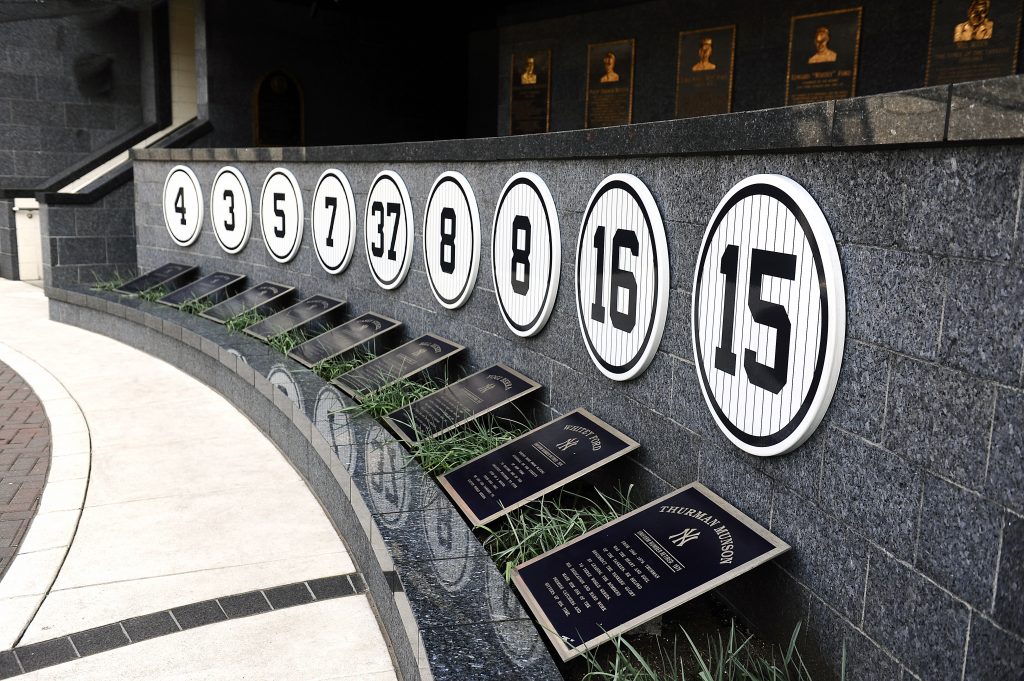
During my time in Canton, and certainly around Yankee Stadium, I tried to find as many monuments to the late captain as I could. Along with a photographer, Barrie Schneiderman, I drove around town, to the stadium that bears his name, the street named for him, the large and impressive gravestone. We drove past the airport and the field where his life came to an end. In New York, we saw his locker, his number 15 on the backs of fans way too young to have cheered for him.
I tried to tell a big story here. The way that Diana has kept her husband alive in the 40 years since he died. It was a special story to tell, not the least because of how much I learned in the process.
(This story originally appeared in the July 2019 edition of Yankees Magazine.)
This was as much a function of timing as anything else. I had plans to be in Cleveland for another story, and it just so happened that the trip I had planned coincided with Didi Gregorius’s first games back from Tommy John surgery.
2019 DIDI GREGORIUS SCRANTON
Didi can be a tough guy to go deep with, which might seem surprising considering his huge smile and engaging social media presence. When the microphone is off, he’s the guy you expect — funny, candid, insightful. But once you start recording, it’s as though he’s working his hardest to give you nothing. One example: I asked him what he did during his downtime-filled rehab that he couldn’t have otherwise. He kind of talked around the question, didn’t give me anything interesting. A few minutes after we got done with the interview, when we were making smalltalk, he talks about this trip he took with Nike. Turns out, Nike asked him to go every year, and he always turned them down. But with so little to do after the surgery, he decided to take them up on it this year.
I mean …
I yelled at him. “Didi! Why couldn’t you say that when I asked you?” There was nothing about it that he didn’t want to put in the story, and when I asked if I could include it, he said of course. He just puts up such a crazy shield when he’s being interviewed. He’ll challenge questions, dispute premises, etc. It’s not as frustrating as, say, Mark Teixeira was during his prime, but it’s still not what you expect the first time you try to interview this otherwise bubbly, hilarious star.
Didi had an interesting season. He returned SO fast from the Tommy John surgery (after playing through some gruesome injuries in the last games of 2018), and he may have rushed things in a way that impacted his performance. Who knows. He’s also a free agent now that the season is over, so we’ll see if he’s back in 2020.
But as difficult as it can be to get him to open up, I thought this was a good piece about the kind of guy he is, the way he works, the things that are important to him, and the drive he has to be the absolute best at everything he touches.
(This story originally appeared in the June 2019 edition of Yankees Magazine.)
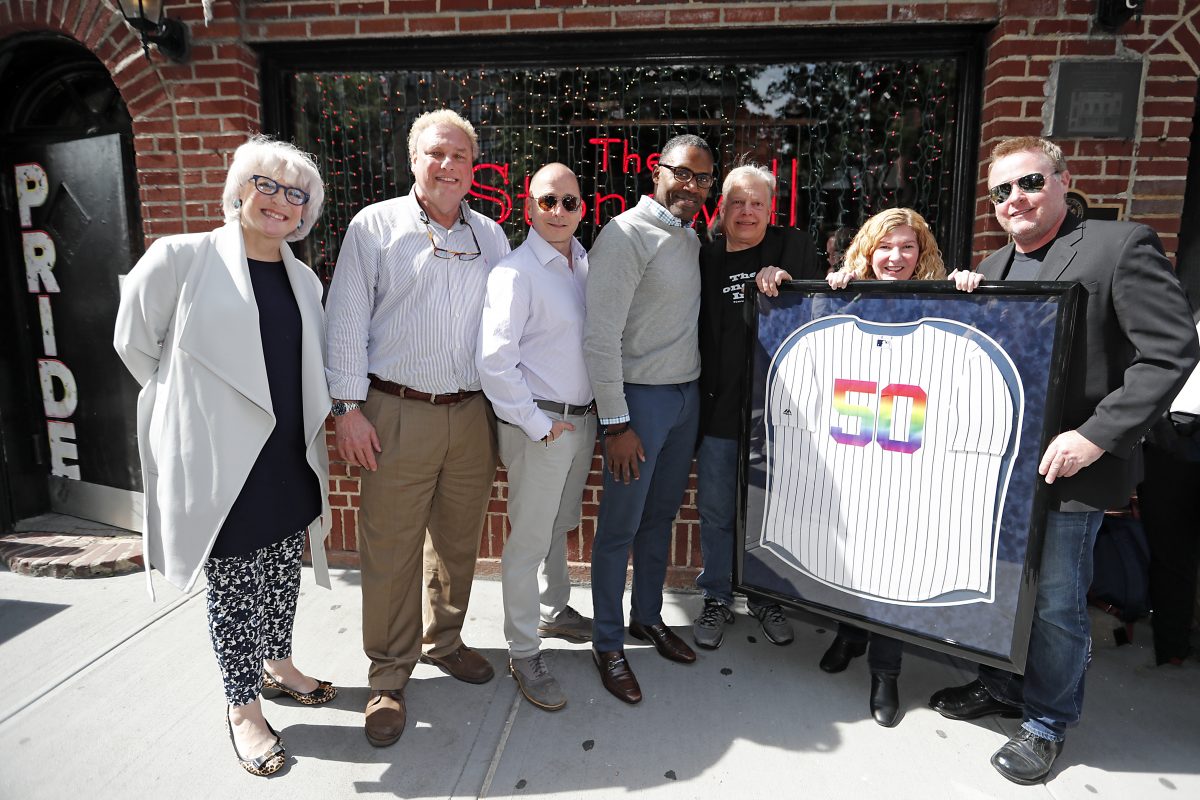
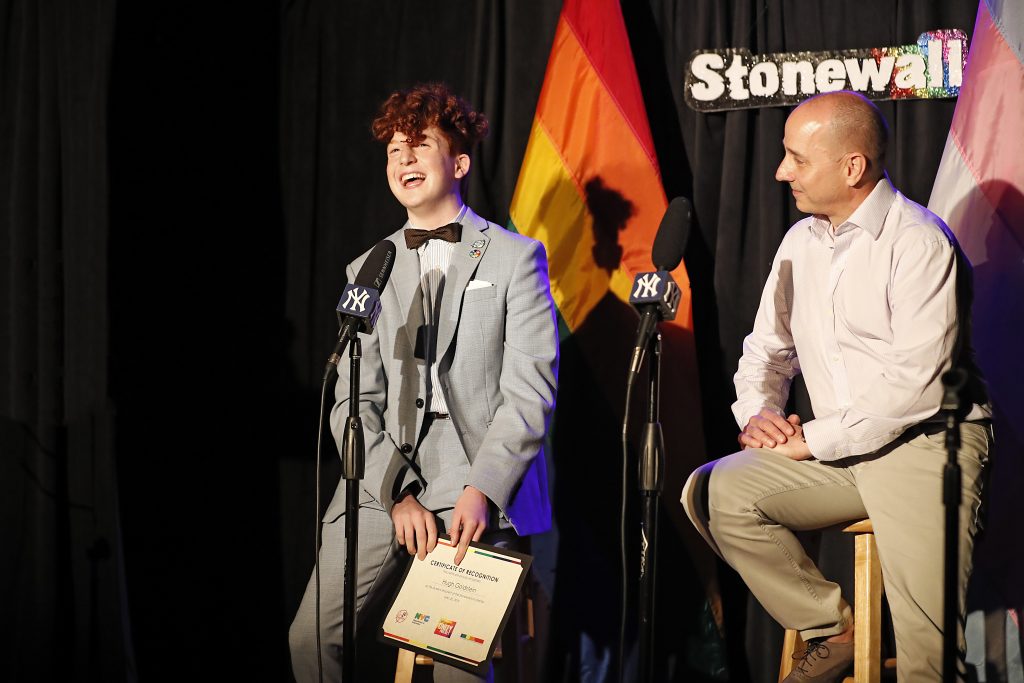
There are times that working for a team publication can be a bit of a drag, but then there are projects like this one, which I still can’t believe happened. The Yankees made a big push this year to honor the 50th anniversary of the Stonewall Riots, and they put together what was a remarkable initiative, encompassing education, advocacy and exposure.
In creating the Yankees-Stonewall Scholars program, the legendary sports franchise and the historic, iconic bar, became unlikely partners, a phenomenon I explore in this story. It’s hard to think back to just how unlikely it would have seemed in 1969 to see the Yankees helping the LGBTQ community. Not that there was specific hostility, neither intentional nor explicitly directed. Just that, as Martin Boyce explains in the story, Yankee Stadium was the place where “Our dads would take us, because they were training us to be straight.”
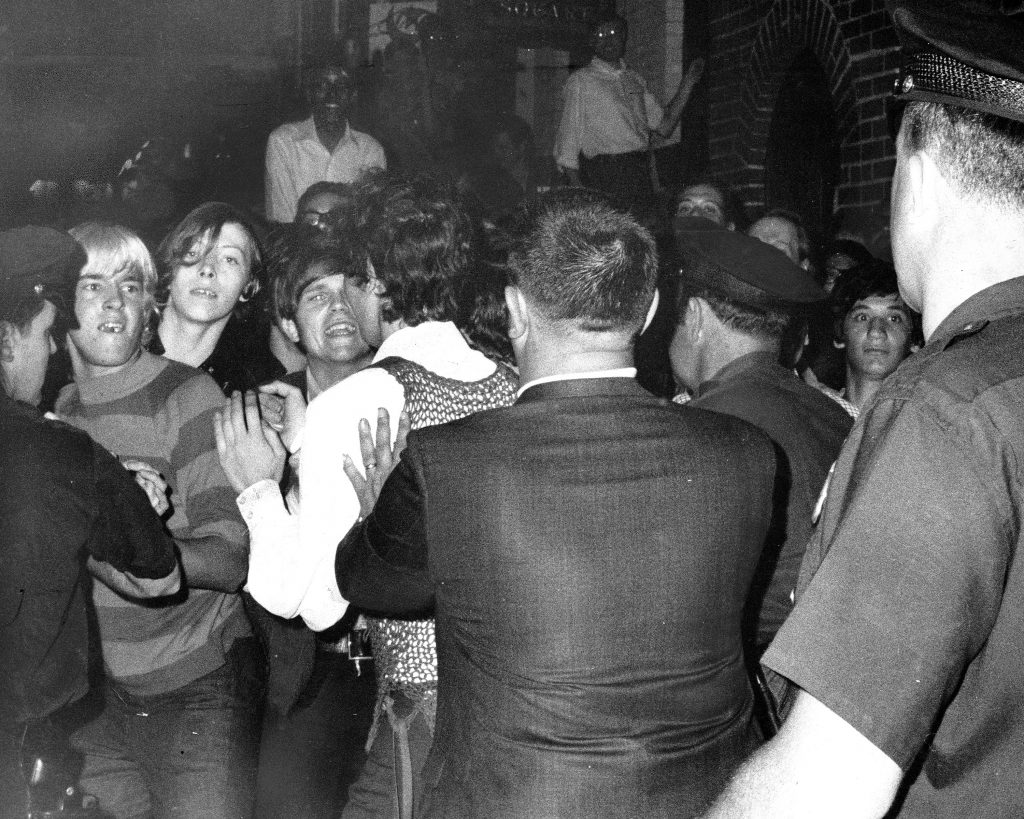
UNITED STATES – JUNE 28: Stonewall Inn nightclub raid. Crowd attempts to impede police arrests outside the Stonewall Inn on Christopher Street in Greenwich Village. (Photo by NY Daily News Archive via Getty Images)
I’m proud of the research that went into this story, the months that I spent learning all about Stonewall, talking to people who were there, meeting with advocates in the community and even talking to Yankees players and staff about their own views of the initiative. To meet the first five winners, this extraordinary collection of students who are going to change the world, was an experience that I’ll keep close forever.
But mostly, I’m proud that the Yankees did this. I know that there are always cynics who will say that they did it to sell tickets or to nod in the direction of progress, but this was real, it was meaningful and it was organic. I saw it, nearly every step of the way. This was the highest levels of the organization — ownership and executives — working to create something that will last. Brian Cashman and his top assistant Jean Afterman participated in all of the interviews to select the winners. That’s remarkable.
And I’m proud that fans at the ballpark in June who wanted to keep score saw this story in their gameday program. I hope that you’ll read it.