(This story originally appeared in the June 2019 edition of Yankees Magazine.)
The Yankees made a big push this year to recognize the 50th anniversary of the Stonewall Riots (see next entry), so as part of our June magazine, I included this interview with former NBA player Jason Collins, who famously came out in 2013 while he was still active. I really enjoyed our talk, a look at the way the world had changed in the six years after he made his announcement on the cover of Sports Illustrated, and the optimism he feels for the future. I also liked the specific stories he told, including the way he decided to use all six of his fouls against a player who had made some insensitive comments.
(This story originally appeared in the May 2019 edition of Yankees Magazine.)
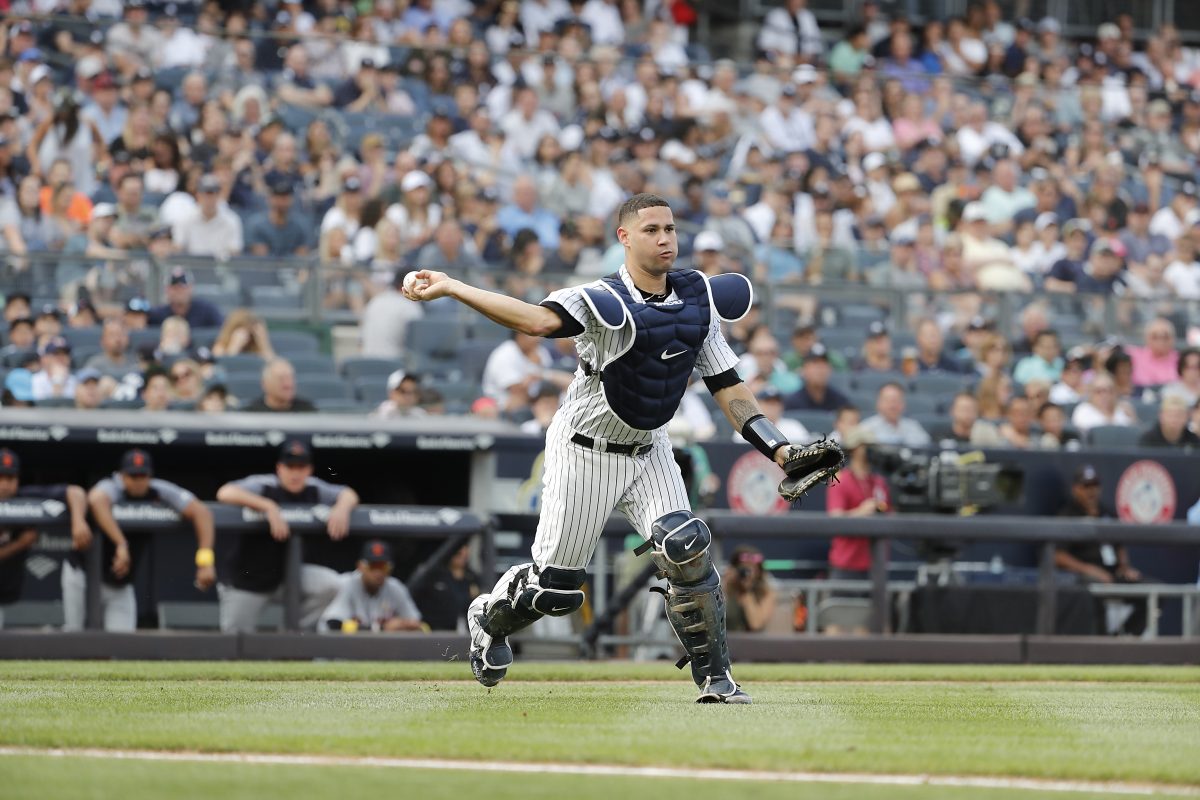
Much like when I wrote about Clint Frazier, Gary Sánchez presented the perfect subject fo the type of story I like to write. He’s remarkably talented, with an incredible resume to date, and yet he draws the ire of so many fans because of whatever imperfections he might show. Undoubtedly, some of it is also racism; no one on the Yankees works harder than Sánchez, and you have to think that some of the accusations of laziness might be less prevalent if he looked more like Austin Romine.
In 2018, nothing went right for the young Yankees catcher. He couldn’t hit much, but more than that, he seemed to spend half of every game running to the backstop to chase passed balls. In reality, it wasn’t nearly as bad as it seemed, but it wasn’t good.
There were a couple of trips to the injured list on account of groin injuries, but when the year was done, the team announced he was having shoulder surgery on his catching arm. And suddenly things started making more sense. How hard must it be to catch a ball moving across the strike zone — especially in cases of cross-ups — if your shoulder is busted?
I chased Sánchez around for a few weeks, trying to get the interview I needed for this story. Mostly, he wouldn’t engage with my central question: What’s wrong with admitting that you’re hurt? What’s wrong with saying, “Yeah, I missed that ball, and it sucks, and I feel badly about it, but I’m doing the best I can.”?
When he finally answered me, I thought it was an incredibly illustrative look into the person he is, the competitor he wants to be, and the standards to which he holds himself.
“The fact of the matter is, we call it The Show. Our fans, they come here to watch us play, and they come here for the show. And I can say, in my experience, if I go to an event — it could be a concert, it could be a basketball game — I don’t go there to see them practice. I have no idea what they do to get ready for that. I just show up for the performance. And like fans, I judge them on what they do on the field. But yes, there’s a lot of work behind the scenes. There’s a routine that is done every day, many, many, many hours before the first pitch of the game. Some fans don’t know that or don’t see that, and that’s the way it is, and that’s the way it should be.”
(This story originally appeared in the May 2019 edition of Yankees Magazine.)
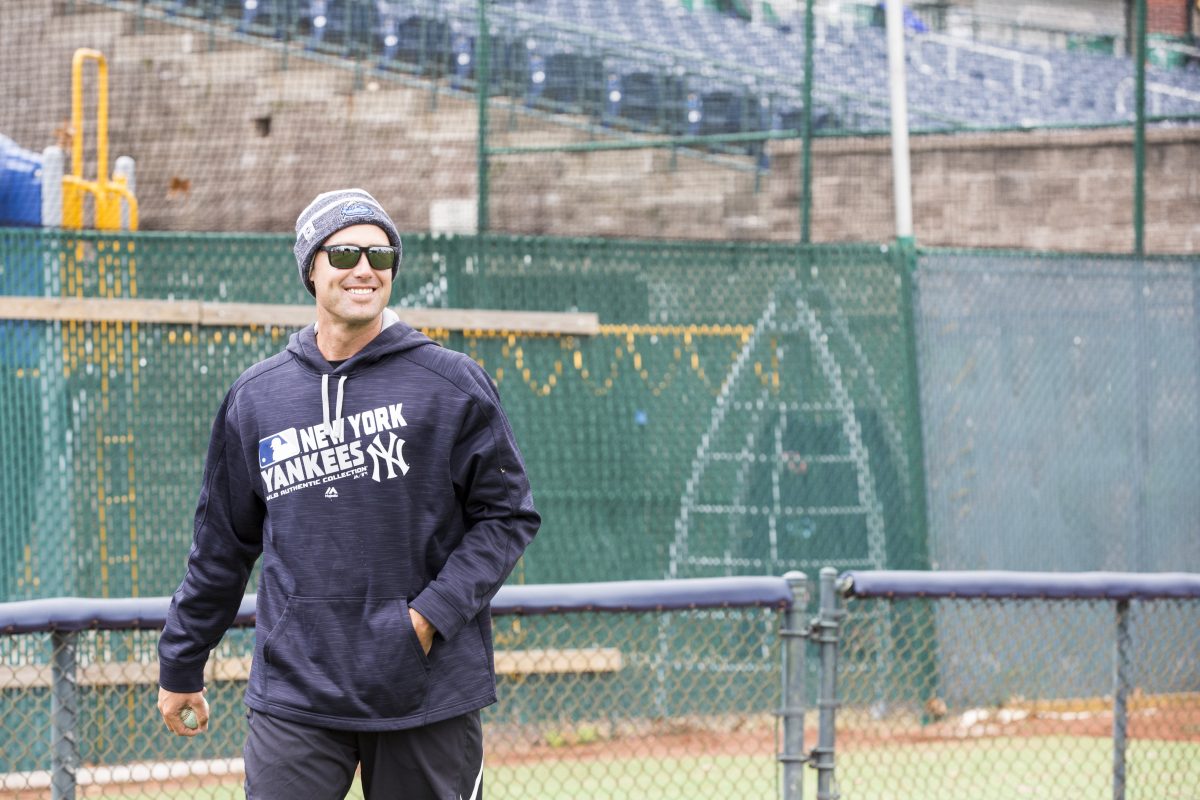
Nothing too crazy here. I’d dealt with Patrick Osborn a time or two, and he seemed like a fun, youthful, interesting guy. In particular, I liked that he was managing Double-A, the same level at which he petered out during his own career. So essentially, he was trying to teach players to do something that he, himself, wasn’t able to do.
Pat let me hang with him for a full day, in meetings, during downtime, and even in the dugout during the game. It was fun watching the whole day play out, and I think the story is a fun look at life on the farm. ]
(This story originally appeared in the April 2019 edition of Yankees Magazine.)
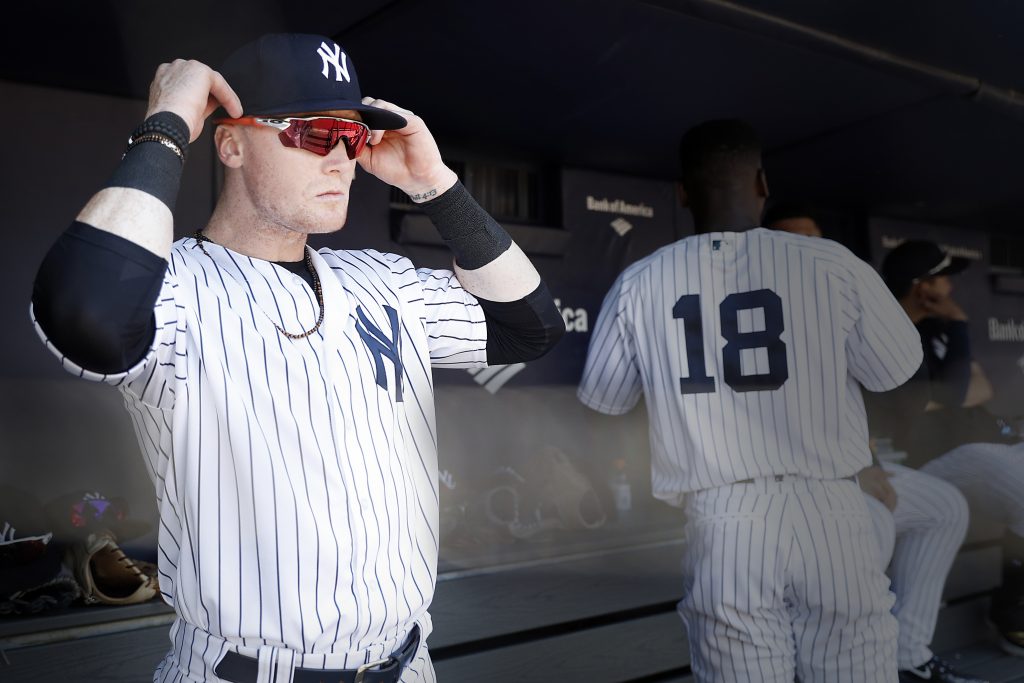
Guys like Clint Frazier fascinate me. Sure, there’s the simple baseball talent. But I’m always drawn to polarizing figures in sports, trying to figure out what exactly makes them so complicated. So I definitely approached this feature on Clint Frazier with a bias in his direction.
Because here’s the thing with Frazier. Everyone has such an easy time talking about the ways that the’s not living up to some part of the game’s code, the rules passed down from Abner Doubleday to Babe Ruth to Mickey Mantle to Derek Jeter. He needs to carry himself differently. He needs to stop making everything about himself. He needs to just shut up.
And yet, anytime you ask the obviously follow-up question — what has he actually done in defiance of those rules? — you get silence. There’s the simple answer, that he had hair that was too long and flashy, and that he expressed some reticence to cut it. But does anyone really care about that? Does anyone actually think that the wildly outdated grooming policy is a good thing? Frazier cut his hair like he was supposed to. Does it really matter that he wasn’t thrilled about it?
A couple of points about this piece: in the quotes I used and the ways that I framed them, I really had to hold in my frustration with the conversation I had with Nick Swisher. I went to talk to him because I figured he would probably be someone to share my irritation with everyone’s overheated takes on Frazier. Instead, I listened as Swisher went on and on about Frazier needing to rein it all in, that he can’t act the way he does. I tried to get him to explain what he meant, but Swisher just kept giving me the rote nonsense.
Conversely, Clint was interesting and willing to engage with all of my questions, even if it might seem weird to have to explain to a reporter why everyone has an opinion about you, and why it’s not necessarily OK. I’ve had plenty of chats with Frazier over the years, but this was probably the deepest we went together. I enjoyed it, and I really think that by the time the season’s over, he’s going to be playing a big role in the Bronx.
(This story originally appeared in the Spring 2019 edition of Yankees Magazine)
“People think we live in igloos,” new Yankees pitcher James Paxton jokes in the story I wrote after visiting him in his offseason home of Eau Claire, Wisconsin, in early January. We probably deserved that after suggesting that we introduce the Canadian left-hander to his new fans in New York by heading out ice fishing. As Paxton reminded us, the weather where he’s from — just south of Vancouver, about 100 miles from Seattle — is actually perfectly mild.
But hanging out on a frozen lake (a first for me — and for James) seemed an excellent way to get a sense of his personality, to “break the ice,” if you’ll forgive the strained metaphor. And Paxton couldn’t have been more game. In fact, after about 45 minutes of photos and intermittent fishing, we (me, the photographer, the two videographers from Yankees on Demand and the YES Network producer) told him that he could leave whenever he wanted, that we had everything we needed. But he wanted to keep fishing for as long as we would let him, so it was nice to know that we weren’t bothering him all that much.
Paxton’s one of those guys that proves the media’s East Coast bias. He really should be more famous than he is, and Brian Cashman probably deserves more credit than he has received for plucking him out of Seattle. His stuff is filthy, with a great four-seam fastball (he is very clear about the fact that his philosophy on the mound is just to go right after the hitters). He also has a terrific, somewhat unfair knuckle-curve, as well as a solid two-seamer, cutter and change. It’s an excellent arsenal, matched with fluid and easy mechanics that keeps his arm in good shape (knock on wood).
He’s also just a good guy. He couldn’t have been more pleasant and helpful over the few days we spent together (guess those Canadian stereotypes are true). Watching him work with kids during a clinic at the facility his brother-in-law Steven Hensley, owns, he made sure to give personal attention to everyone there. Hensley thinks the kids have no idea just how good Paxton is when he’s teaching them. He wishes that the pitcher got the attention he deserves. But if Paxton keeps pitching like he did in May of 2018 — when he threw a 16-K game, then followed it up with a no-hitter — the attention will definitely come his way. You can’t go under the radar in the Bronx.
(Courtesy New York Yankees)
This was a fun one — I got to ice fish! I even caught some! That was extremely cool. And I like the story, too. Hope you’ll read.
(This story originally appeared in the Spring 2019 edition of Yankees Magazine)
When the Yankees hired Aaron Boone, my first thought was similar to a lot of other people’s: Why? Only, I think I was coming at it from the opposite side of most people who were confused by the move. Why, I wondered, would Aaron Boone want this job?
Obviously, there aren’t too many managing positions that compare in fame and prominence to the top job in the Bronx. But why would you want your first job to be replacing a guy who was fired after taking an overachieving team within a game of the World Series? Why would a guy such as Aaron Boone, whose short career in pinstripes included a basically perfect, singular memory, want to change that? Becoming a manager is basically just starting the clock until you inevitably get fired. Even Joe Torre left under not so great terms.
Again, why would you want this job?
I spent a year watching Boone pretty closely, trying to get a measure of the guy, before I got to spend some time with him on what was almost exactly the one-year anniversary of his hiring. We chatted in his office, as Boone — smiling, enthusiastic, ready for the new year — talked about what went right for so much of the 2018 season, and what went wrong when the games meant the most. It’s difficult to fully and honestly judge the year. On paper, so much went right. Even in the ALDS loss to Boston, Boone’s players were right there in all but one game, the absolute laugher in Game 3.
But Boone clearly took a different philosophy into the playoffs than his counterpart, Alex Cora, did. Cora threw away the book, making aggressive pitching changes without a second’s thought. Conversely, the knock on Boone after the series was that he took too long to react, leaving pitchers in to fight through trouble, letting the clock tick toward midnight instead of acting. I wanted to take the manager’s temperature with a few months of perspective.
(Courtesy New York Yankees)
I’m not sure how much new ground we broke. He basically met me halfway on my questions about the playoffs, admitting that there are some things he has second thoughts about, but insisting that the process was sound. And I’m not sure he’s wrong about that. Cora got the last laugh because his team won, but if, for example, the Yankees had come back to win Game 4, after Chris Sale had pitched the 8th inning (because Cora was managing to win every single pitch), I’m not sure who would have pitched in the deciding Game 5. Maybe then we’re talking about Boone being a genius for remaining patient, for going with what had worked. Perhaps we’re just overthinking all of this.
(This story appears in the October edition of Yankees Magazine.)
I’ve written about CC Sabathia plentyover the years. He’s one of the best guys on the team to talk with — always funny, always available. He doesn’t BS you at all; one example that has always stuck with me is after the Yankees traded away a lot of veterans in 2016 during a hyper-speed rebuild. That week, I asked CC what he thought about the young kids getting their chances. The big left-hander basically told me he couldn’t care less about them. He was a veteran, and he didn’t have enough time left to think about the future.
It was a funny comment, but I question whether he meant it. After all, Sabathia has been leading the Yankees’ clubhouse for years, deftly taking the baton from Derek Jeter (much as he took The Captain’s locker when Jeter retired). CC is a big brother and mentor to so many of the young kids on this roster — everyone loves him, and he loves all of them.
My goal for this feature was to write about CC’s first decade in pinstripes. He signed a one-year contract before the 2018 season, so whenever the Yankees get eliminated, he’ll become a free agent. He has given no indication that he wants to retire, and I certainly think that he was good enough this year for the Yankees to offer him the same deal again. But if this is it for CC, it was a pretty incredible ride.
I reached out to his people about an in-depth interview away from the stadium, and offered to go on the road if it was easier (most players have more down time when they’re traveling — away from family and other commitments). I was shocked, though, when they offered me time during a trip to Oakland. Sabathia’s from the Bay Area, and he’s always terribly busy when he heads home. But he was doing an event for his PitCCh In Foundation on the off day after the series, so I’m guessing it was how they were hoping to bribe me into covering it. Mission accomplished.
I spoke to CC over breakfast for about an hour, and it was a great, enlightening talk. But I couldn’t write the story I had planned — it didn’t make sense to fly to Oakland/San Francisco to write about New York. I ended up speaking to a ton of people from his past, and I got a picture of an incredibly strong person who’s incredibly important to his community. Everyone made time to talk to me about him — I can’t count how many of my interviews included some variation of “I barely have any time, but I’ll always talk about CC.” From a young age, everyone back home in Vallejo, California, seemed to know that Sabathia was special, and they all went out of their way to make sure he could thrive. His mother, his coach and his friends all told me stories about people basically getting him out of a place where something bad was about to happen, walking him home instead of to a party where things would go down. He was lifted out of Vallejo, and he seems to have made it his life’s work to help out other kids in similar situations.
Whatever comes next for CC, he’ll always be one of my favorite guys to write about. I hope this isn’t the end for him, but if it is, I hope he gets to live out his dream of never having to wear a collared shirt again.
Just a fun, quick interview with Jane Leavy, a terrific journalist who has written three incredible baseball biographies. I was fascinated to talk to her about the fact that the subjects she had chosen over the years — Sandy Koufax, Mickey Mantle and now Babe Ruth — seemed to me to be so picked over already. Why not a nice biography on Joe McEwing?
One thing that really intrigued me about her latest book, The Big Fella: Babe Ruth and the World He Created, were some of the early descriptions of her search for the story to tell. Several years ago, I went through a similar quixotic journey with The Babe, tracing steps similar to those Ms. Leavy took. Something about The Babe Ruth Birthplace Museum in Baltimore made my understanding of Ruth hazier instead of clearer. (You can read my attempt to understand his legacy here.)
Anyhow, I highly recommend Leavy’s newest book, as well as her first two.
(This story originally appeared in the September 2018 edition of Yankees Magazine.)
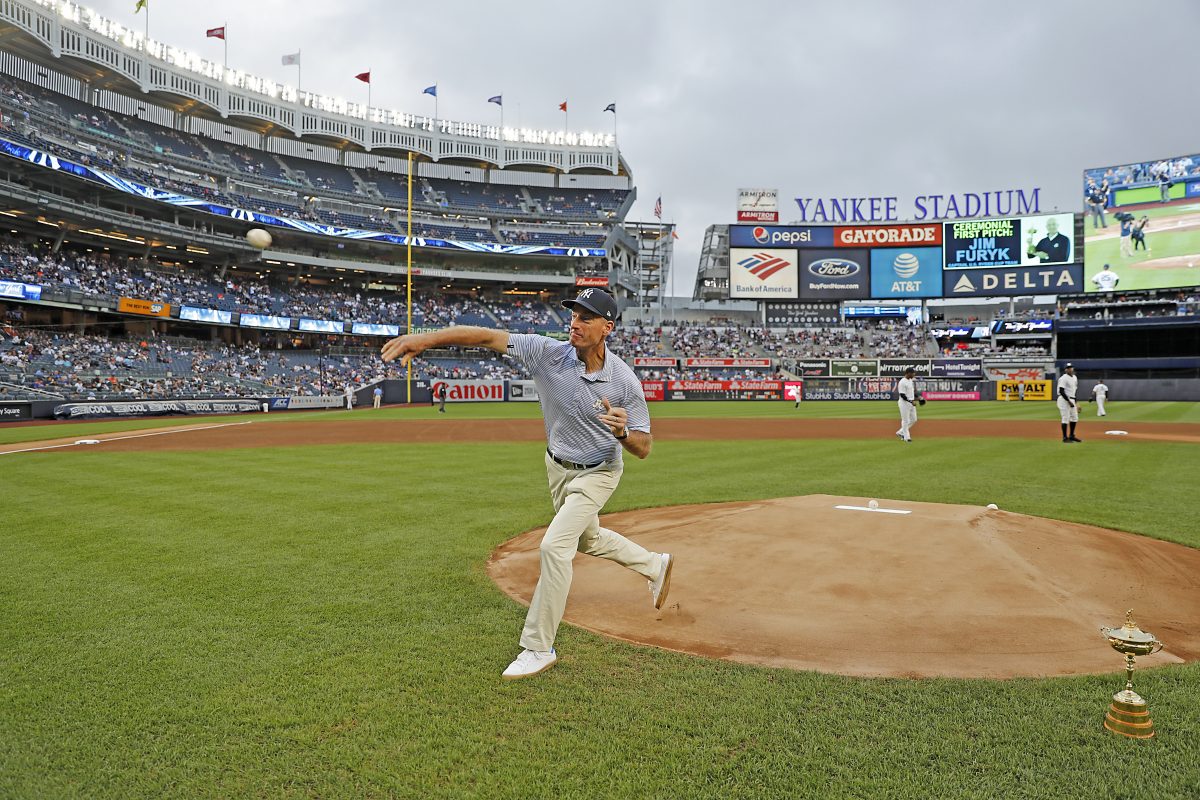
Nothing too fancy here, just a quick interview with Jim Furyk in advance of his stint captaining the U.S. Ryder Cup team when it heads to France at the end of September. Furyk brought the Ryder Cup trophy to Yankee Stadium, and I got a few minutes to chat with him about his own Ryder Cup history, his expectations for this year, and what makes the event so special.
(This story originally appeared in the September 2018 edition of Yankees Magazine.)
As the 2018 trade deadline approached, it seems that the Yankees were in desperate need of a starting pitcher. So general manager Brian Cashman went out and acquired one of the best … relief pitchers? … on the market? On the surface it made little sense. But baseball is changing, and all you need to do is look at the ways that the Oakland A’s and Tampa Bay Rays approached this year to see it. And sure, the Yankees are playing their part, too.
Starting pitchers are throwing fewer innings than ever, and since the game is still nine innings long, that means that managers and pitching coaches are being forced to rely on relievers more than ever before. So in Zach Britton, Cashman added a fourth elite closer to the Yankees’ bullpen, joining Aroldis Chapman, Dellin Betances and David Robertson.
For this story, I tried to introduce Britton to Yankees fans, while also looking at what the acquisition can tell us about the new team-building philosophies at play. I had never interviewed Britton before this, and we had a really fun chat. He’s incredibly honest and thoughtful in his answers. A highlight for me was when we talked a lot about all of the high-leverage situations he would face in his hybrid role on the Yankees’ roster. An experienced closer who wouldn’t be doing much ninth-inning work, he was excited about the change, anxious to add a new club to his bag. Britton is enough of a student of the game (in particular, of the ways that former Yankee Andrew Miller has thrived in a unique bullpen role) to know that the idea of the ninth inning being where all the money is made doesn’t really make sense anymore.
But at the same time, he admitted that he couldn’t really explain why it was still important to him, why he still expected that when he enters free agency after the 2018 season, he expects to find a job closing again. He was almost treating it like a thought experiment, brainstorming responses. “I have the American League record for consecutive saves,” he told me, more thinking out loud than anything else. It turns out, the game might be changing faster than even the players can comprehend (for more on this, ask Greg Bird about the shift. Then back away slowly).
I think it’s going to be fascinating to see how all of this develops in the coming years. In the meantime, I hope you’ll check out this story.