Master Craftsman

(This story originally appeared in the August 2018 issue of Yankees Magazine.)

I hope I’m wrong when I say this, but I’m not sure I’ll ever get to work on a more interesting reporting project. I had been circling something like this for a while, hanging out with a minor league roving instructor as he moved from town to town coaching different players. Between the Drew Henson scouting story that I wrote in 2016 and my feature last year about Donny Sands learning how to play catcher, I’ve long been fascinated by the people behind the scenes, the ones who help the players develop into major leaguers.

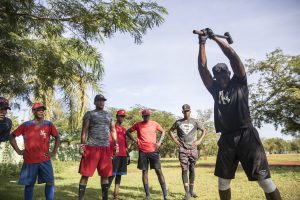
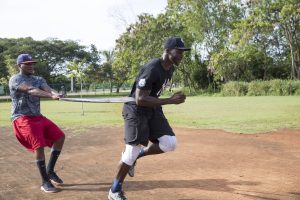
When I started asking around the Yankees front office, a bunch of people pointed me toward Danny Borrell, one of the team’s two pitching coordinators. I had never met Danny, had never heard of him, and didn’t really know what to expect. But he was open to the story from the start, and agreed to let me tag along on two trips — Staten Island and Pulaski.

The night before we started, he emailed me to say that he was actually going to be in Charleston instead of Pulaski, that something really big was happening. Normally, when big things happen around the team, we’re told to stay away. This was a rare case when I was being told that something huge was happening, and that I should make sure I was there for it. It was a no-brainer. 

He wouldn’t tell me what the big news was until after it happened, so we spent the first few days just watching the way he interacted with all the young minor leaguers — Short-Season A-ballers in Staten Island, then Low-A players in Charleston. It was fascinating. Danny would strap on catching gear and catch all the bullpens (despite being A: left-handed; and B: a former pitcher). He just has the most positive way about him, always laughing, joking, teaching. The best thing about writing minor league stories is that you really get total access. I have never stepped in the bullpen at Yankee Stadium, but while I was following Danny around, I was basically standing next to the pitchers as they were doing their workouts. It was awesome.

Danny let me hang out in meetings, he let me stand over his shoulder as he watched video with players, he let me stay next to him while he watched the games. The only time he told me he needed me to stay away for a few minutes was when they had the big meeting. As it turned out, they were taking Dermis Garcia — a pretty substantial prospect in Charleston — and letting him try to pitch. Garcia has never pitched, but his arm from third base was incredible, and Borrell had long been pining to get him onto a mound. And after Brian Cashman and his team spent time in the offseason pursuing Shohei Ohtani, they were encouraged enough by the idea of a two-way player to see if Garcia might have the chops to handle it. So they presented it to him, he enthusiastically accepted, and the next day, we stood right along the bullpen as Garcia threw off a mound for the first time in his life.

This story was an absolute joy to write, everything I could have hoped for and more. I don’t think I’ll ever have access like this again. I’m happy with how it came out.

https://www.mlb.com/news/danny-borrell-molds-yankees-young-pitchers/c-287603796
A Major Minor Showcase

(This story originally appeared in the August 2018 issue of Yankees Magazine.)

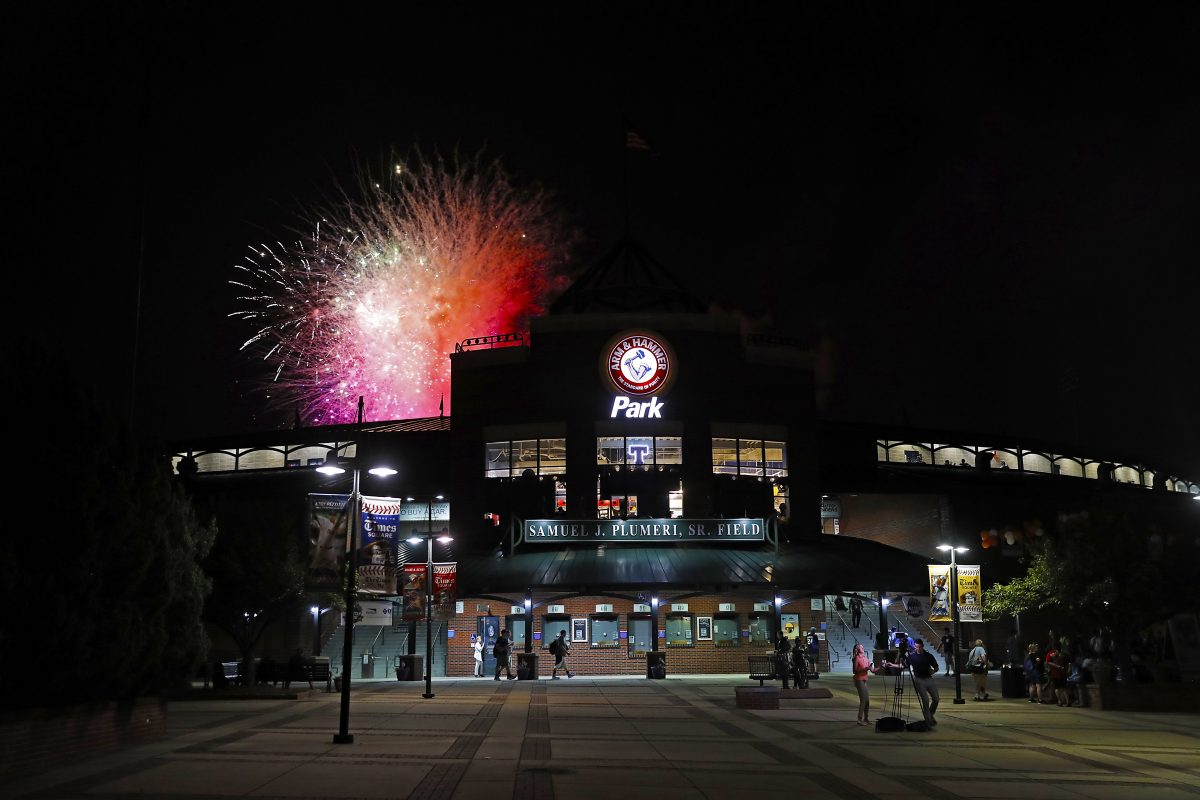
The Trenton Thunder were hosting the Double-A All-Star Game this past July, and since they are a Yankees affiliate, it was only natural that we’d do a magazine piece on the spectacle.

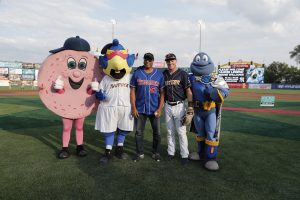
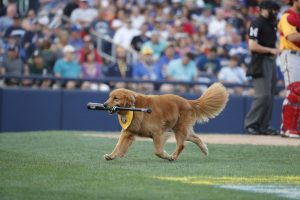
I’ve been to eight MLB All-Star Games, so I was really interested to see how this minor league version would compare, and what I saw was an absolute delight. It was everything that makes minor league baseball so fun, just amped up about 300 percent. They still had Rookie the bat dog retrieving lumber in the early innings, but they also had Budweiser Clydesdales doing a lap of the warning track. The Thunder have a pork roll mascot (and on Fridays, the team wears Trenton Pork Roll uniforms). I laughed literally every time I saw the weird pink meat costume wandering the concourses. All of the silliness and nonsense (in the best way) was still there. It was just amped up.

I sat in the press box over these two days listening to one soon-retiring New York Post writer bemoaning the assignment, hoping that Tim Tebow wouldn’t do anything special, so that he wouldn’t have to write about it. Dude, we get it. This isn’t The Masters. But I really loved covering this event, and I’d love to do it again sometime. 

https://www.mlb.com/news/trenton-packs-the-fun-into-aa-all-star-game/c-287605738

The Understudy

(This story originally appeared in the July 2018 issue of Yankees Magazine.)

I’ve always wanted to write a story about the sensation of being a big-league backup. The fact is, though, most guys don’t want to talk about it, for obvious reasons, and it’s hard not to come off as a bit of an ass when you’re asking them.

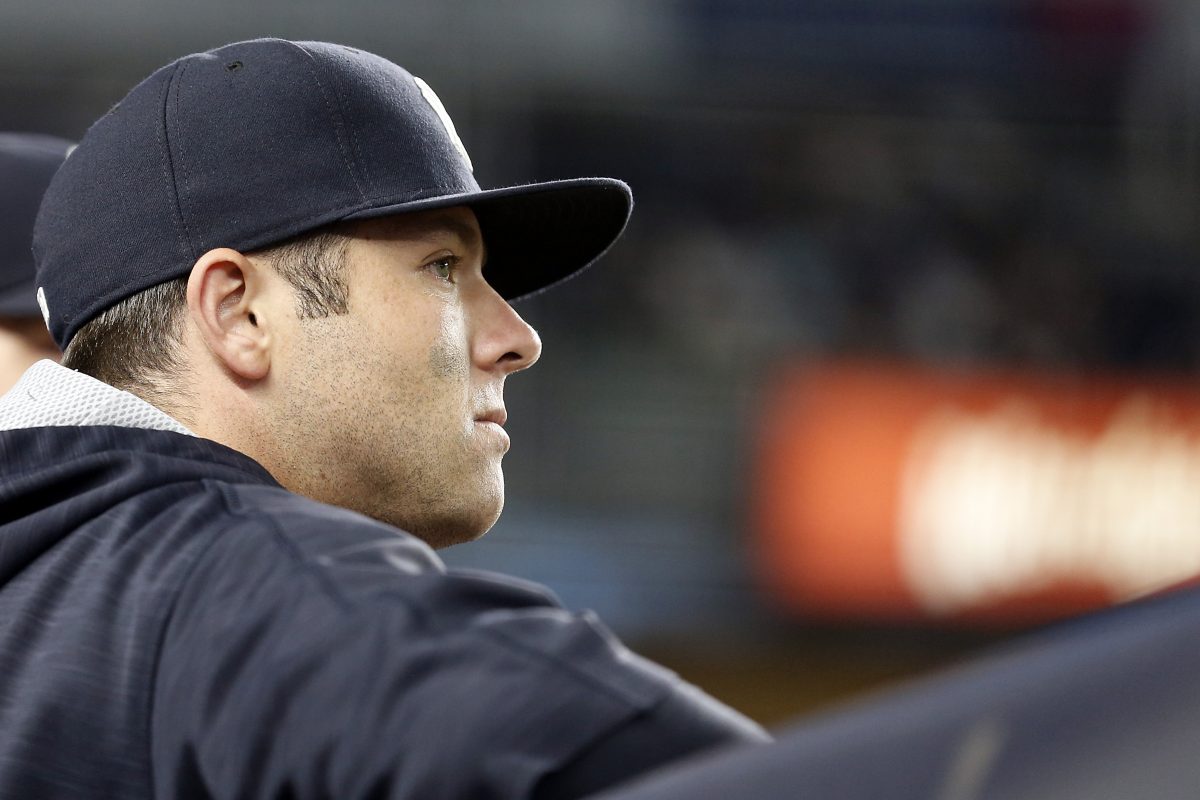
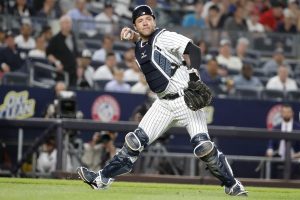
This season, though, Austin Romine was thriving in his role as Gary Sanchez’s back-up, and I felt that I had a good enough relationship with Austin to give it a try. What ensued was a really interesting, sometimes uncomfortable conversation with one of the most interesting guys in the Yankees’ clubhouse. Romine was very clear that the team is best when Gary Sanchez is catching, and he understands his role. But he also acknowledged that no one wants to play for the B team.

Of course, all this was before Sanchez got hurt, and Romine was thrust into the starting role, which, conveniently, was a hypothetical we discussed.

I really liked the conversation, and I appreciated Romine being willing to have the chat. Hope you’ll read and enjoy.

https://www.mlb.com/yankees/news/austin-romine-thrives-as-a-backup-catcher/c-284048780

Heat Check

(This story originally appeared in the June 2018 issue of Yankees Magazine.)

I’ve wanted to write about fastballs for a while, and the Yankees make for good subjects. In Aroldis Chapman, they have the hardest thrower in MLB history. Luis Severino throws harder, more consistently, than any other starter in the game. So I wanted to answer a question with this story: What does all that speed actually add up to?

The fact is, every pitcher in today’s game is throwing gas. You just don’t see the “crafty lefty” all that much anymore, nor are there really any more knuckleballers coming up. The fact is, if you want to hit in the majors these days, you’d better be able to handle the heat.

So this story looks at how the speed works. What’s the difference between 90 mph and 100 mph? Austin Romine says that it all just feels fast once it gets above 95, but what does that difference actually mean? How do hitters time pitches that come in faster than they can blink?

Chapman’s past makes him hard for me to write about, so I’m happy that this didn’t turn into a simple profile of the guy, or any kind of celebration. I used his (for obvious reasons) as a jumping-off point, a way to tell the story about the incredible fastballs that have taken over today’s game.

Hope you’ll read and enjoy.


https://www.mlb.com/yankees/news/aroldis-chapman-leads-charge-for-flamethrowers/c-279908136

Rocket Man

(This story originally appeared in the May 2018 issue of Yankees Magazine.)

Like the Greg Bird feature I had the opportunity to write in October of 2016, this piece was almost a full year in the making, in a way that caught me totally by surprise. It started in June of 2017, when I was down in Charleston reporting a story on Donny Sands. Low-A baseball looks a lot different from what I’m used to seeing in the Bronx, but the truly elite prospects stick out. And I couldn’t take my eyes off this kid in the outfielder, a guy I’d never heard of named Estevan Florial. After the first game I saw down there, I met up with my photographer, and immediately, he asked me, “Hey, what do you know about Floral?” He was that impressive.

A month later, I was in Miami for the MLB All-Star Game, and Florial was one of two Yankees representatives in the Futures Game. One part of his story really interested me — the fact that he was from Haiti. Despite sharing an island with the Dominican Republic, which produces more baseball players than you can count, there has never been a major leaguer from Haiti. In the clubhouse before the game, I asked him about it (as he dressed in a uniform that had a Haitian flag on the chest). He told me that he was actually from the Dominican Republic, which confused me. I kind of restated the question, and he gave me the same answer. I figured there was some sort of language barrier (Florial speaks English well, but it’s still not his first language).

Fast forward three more months, and Florial is part of the contingent in the Arizona Fall League. I tried to find out again — what did he mean that he wasn’t from Haiti? Is he saying that he barely lived there, then moved to the DR? No, he told me. He was born in the Dominican Republic.

Now I was really confused, so I started poking around. What I found was a remarkable story of perseverance, of determination, of a great kid whose dream was almost broken by a well-intentioned system that was nonetheless unprepared to handle a story like his.

So when I was down in the Dominican Republic to report on my Luis Severino feature, I arranged to spend some time with Florial, as well. He gave me the whole story, the let me hang out as he worked out with some young kids and his old coach. I also spent some time with Bernie Tatis, the scout/manager/agent who discovered Estevan years ago, when he was named Haniel D’Oleo. 

This was a remarkable story, one I was privileged to tell. I hope I did Estevan and his family justice, and I’m so grateful he trusted me enough to open up the way he did. I definitely root for most of my story subjects to do well — especially with the minor leaguers, it just makes the story look better if the kid turns into something. But I don’t care if Estevan never makes it to the majors. I’ll always cherish the time he gave me, and I’ll always be proud of this story.


https://www.mlb.com/yankees/news/estevan-florial-ready-to-make-name-for-himself/c-274705446?tid=163658034


Holiday Spirit

(This story originally appeared in the Spring 2018 issue of Yankees Magazine.)

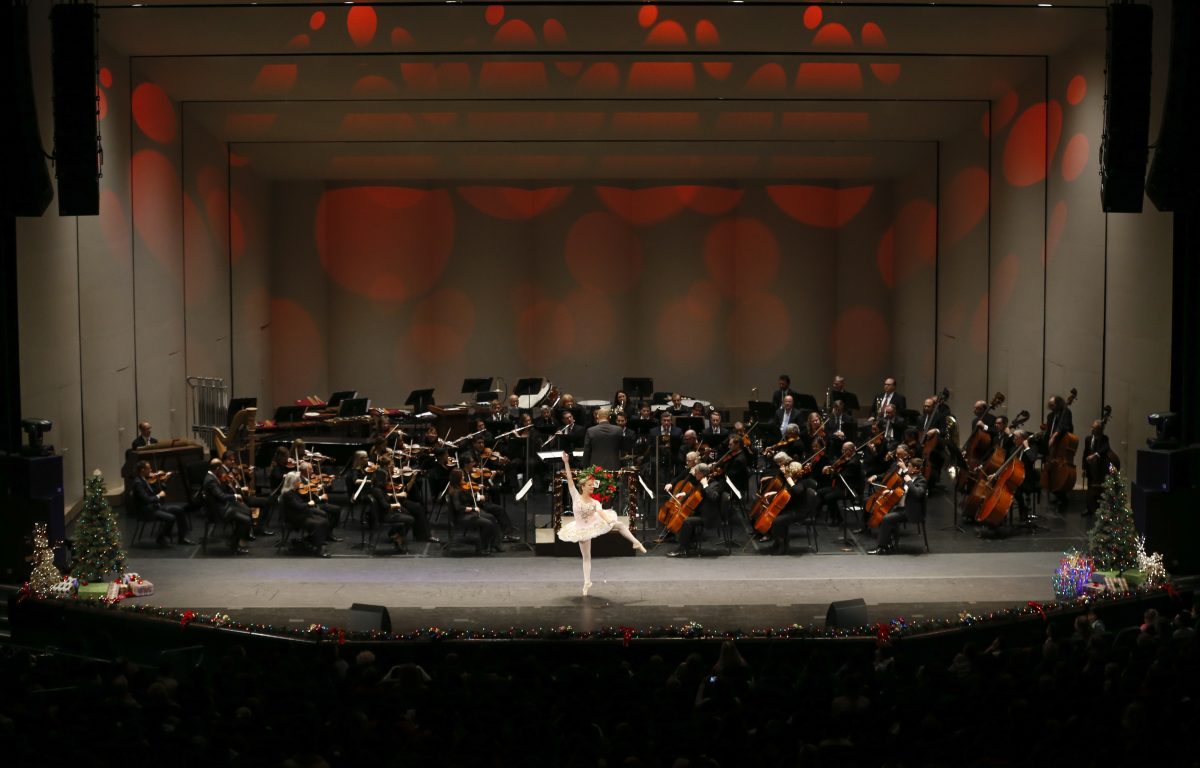
Nothing too exciting here, just a service-y piece about the holiday concerts that the Steinbrenner family puts on every year around the Tampa Bay area. I had heard about the initiative during my years with the Yankees, but this was my first time heading down there to see the whole production, and I was really impressed by the scale and scope.

There’s a full orchestra playing Christmas hits for young school kids, complete with music education, sing-alongs and a visit from members of the Yankees organization, who tell the kids their story, offer some inspiration, and then read “A Visit From St. Nick.”

Very cool event, and I left very proud to be associated with the organization that puts them on. Hope you’ll read.

146-152 TAMPA COMMUNITY FEATURE

Up, Down and Back Again

(This story originally appeared in the April 2018 issue of Yankees Magazine.)

I can’t say enough about how much I enjoyed writing this story, and how pleased I was with the outcome. I went down to Santo Domingo in January to spend some time with Luis Severino for this story, and with Estevan Florial for one that would run in May.

My goal was mainly to watch Severino work out, to see how what his life at home was like. I had never been to the Dominican Republic, so I really had no clue what to expect. But we all watched Sevy grow up before our eyes in 2017, then saw him crash head-first into a wall in the AL Wild Card Game. He lasted only a third of an inning that night, an utter disaster for a pitcher who would end up finishing third in AL Cy Young voting.

But when the Yankees came back to beat the Twins, Severino got another chance to show who he really was, and he was very effective the rest of the postseason. So the two of us spoke a lot about that whole roller-coaster experience, and how similar it was to what he experienced in 2016, when — after a brilliant 2015 debut — he was simply dreadful as a starting pitcher. He obviously came back in 2017 and showed what he could do, much as he did in the 2017 postseason. So what did he learn from that first turnaround? What was he applying? And how was he approaching his new role as the team’s ace, the eventual Opening Day starter?

I’m basically in awe of guys like Severino. So talented, so genuinely nice and interesting, such a bright future. One highlight of the trip was that we conducted our main interview with him at his apartment. All along, his wife and mother were in the kitchen cooking lunch. After we wrapped up, we shook hands and started to say goodbye, but he told us that we had to stay for lunch, that they were cooking for us, that we were their guests. I’ve been out to eat with players before during interviews, and it’s always a bit strange to share a meal under those circumstances. This was just a giant feast in the guy’s house, the food delicious and fresh. It was typical of the way that guests are treated in the culture, and my photographer was actually surprised that I had been so surprised. He had figured all along that they were cooking for us. Shows what I know.

That’s what the guy is like, though. I mentioned in a podcast recently that a lot of players, when they don’t want to deal with an interview, will say something like, “I’ve got to go run.” Severino will say that he has to go run, then he’ll go run, then he’ll come back and seek you out because he remembers that you needed him. He’s still so young, but he’s such a pro, a very easy guy to cheer for.

Hope you enjoy this one.

https://www.mlb.com/yankees/news/luis-severino-armed-with-2017-playoff-lessons/c-269277258?tid=163658034


Ain’t Life Grand


(This story originally appeared in the Spring 2018 issue of 
Yankees Magazine.)

Just like we did for the 1996 team in 2016 and the 1977 team in 2017, we decided to run a year-long series of Q&A features with members of the 1998 Yankees for the entire 2018 season. We got things started pretty hot with Tino Martinez, whose unforgettable grand slam in Game 1 of the World Series set the Yankees on a course for a sweep over the San Diego Padres, a rout befitting one of the greatest teams in baseball history.

I caught Tino during an event in Florida, where he was speaking to students attending one of the Steinbrenner family’s annual holiday concerts, then reading “A Visit From St. Nicholas” (better known as  “Twas The Night Before Christmas …”) while accompanied by a symphony orchestra. We chatted in his green room before the performance, and it was easy to tell how much Martinez enjoyed getting to look back at such an incredible career highlight. It’s mostly well-known at this point that up to that point, even through the wild 1996 run, Martinez had struggled in the postseason, even getting benched when the ’96 World Series moved to the NL park so that Joe Torre could keep his regular DH, Cecil Fielder, in the lineup.

The World Series grand slam, besides being one of those moments that literally every baseball fan has dreamed of in his or her backyard, is shown on the video board at Yankee Stadium enough that I can pretty much close my eyes and recall the entire at-bat. The key pitch, obviously, was the 2-2 offering, somehow called a ball (there’s no way it wasn’t a strike, sorry Tino). I had fun going back and forth with him about it, allowing him to maintain that it was a ball. Whatever. Baseball players are funny.

Anyhow, I can’t say that this broke all that much new ground, but it was fun to talk about an iconic moment in baseball history, part of a run by a team that is rightly celebrated among the sport’s elite. Hope you’ll enjoy.

https://www.mlb.com/yankees/news/tino-martinez-recalls-yankees-dynasty/c-267270982?tid=163658034

Back to the Future

(This story originally appeared in the Spring 2018 issue of Yankees Magazine.)

In the five months since I wrote this story, a few of the players have already been traded, so it was a bit funny to go back and read it last night. But I had a ton of fun reporting from the Arizona Fall League for the second straight year, and seeing some of the awesome prospects that are thriving in the Yankees’ system.

This year was a lot different from my 2016 visit, of course. In the course of that one year, the Yankees had gone from a team looking toward the future, to one very keenly aware of its arrival. Prospects are incredibly fun when you’re rebuilding, even if it’s a hyper-speed reload such as the one Brian Cashman put together during the 2016 season. But when I headed to Arizona this time, it was just a week after the Yankees’ season had ended in Game 7 of the ALCS. Times had changed, quickly.

Justus Sheffield (Photo Credit: New York Yankees)

And still, it was impossible not to be excited by some of the guys wearing the interlocking NY under the desert sun. Albert Abreu dazzled on the mound. Estevan Florial … the guy is special, and his talent screams out at you. Justus Sheffield sure seems like he’s going to be a star, and he took on something of an alpha-dog role mound the young future Yankees.

I did my best to highlight each guy out there, trying to show fans reading what they could look forward to in the months and years to follow. There was less immediacy than the year before, although Billy McKinney, one of the players out there this past year, would actually end up reaching the majors with the Yankees in the season’s first week, before a near-immediate injury cut down his time with the team. (He would then be traded at the deadline for J.A. Happ. Here’s hoping that he has a heck of a time in Toronto.

Their Estrada (Photo Credit: New York Yankees)

This is a light piece, a roundup, but I really loved checking in with these kids, and I’ll certainly be tracking their progress for years to come.

Hope you’ll read and enjoy.

https://www.mlb.com/yankees/news/yankees-prospect-base-stays-steady-in-2018/c-267272684?tid=163658034

The Final 42

(This story originally appeared in the Monument Park Commemorative Edition of Yankees Magazine. To purchase your copy, visit www.yankees.com/publications or call 800-GO-YANKS.)

I’ve always been of two minds about the idea of retiring uniform numbers. On the one hand, I certainly understand the sentiment — it’s a recognized means of appreciating greatness, and I’m on board with that. The downside to me, though, is that in doing so, your taking away the opportunity for players to recognize their heroes by choosing to wear the number. When Carlos Delgado wears 21 to celebrate Roberto Clemente, that’s obviously a meaningful tribute; does it really make sense that a player for the Pittsburgh Pirates can’t make the same choice?

I’m pretty sure that I’m in the minority on this, so I don’t feel any real need to harp on it. I kind of liked it a few years back when the University of Michigan — my alma mater — began honoring greats from the team’s past by “unretiring” their numbers. Essentially, they tried to establish the idea of wearing those numbers as a privilege, rather than celebrating the university legends by keeping their numbers out of rotation. I liked seeing Michigan QB Devin Gardner wearing 98, as a tribute to “Old 98” Tom Harmon. But again, your mileage may vary.

Embed from Getty Images

Anyway, that’s a long lead-in to this Q&A with Sharon Robinson, daughter to the legendary American pioneer Jackie. In 1997, on the 50th anniversary of his big-league debut, Major League Baseball retired Jackie’s No. 42 throughout the league, while grandfathering in the right for players already wearing the number to keep it until they retired. Mariano Rivera eventually became the last player in the league wearing the hallowed digits, even as it already hung in Monument Park, as it did at the other 29 Major League stadiums.

When Rivera finally retired after the 2013 season, the number went with him. Now it only appears every April 15, during the league-wide celebration of Jackie Robinson Day, at which all players on all 30 teams wear Jackie’s 42.

I think Sharon is a terrific person to speak with — I’ve long admired the way she honors her parents’ legacy by her work in educating children about the era in which her father played, and the struggles that continue. I thought a lot of her answers about Jackie’s legacy — and especially about Jackie as a father — were exceptionally interesting.

https://www.mlb.com/yankees/news/sharon-robinson-qa/c-263620308?tid=163658034